
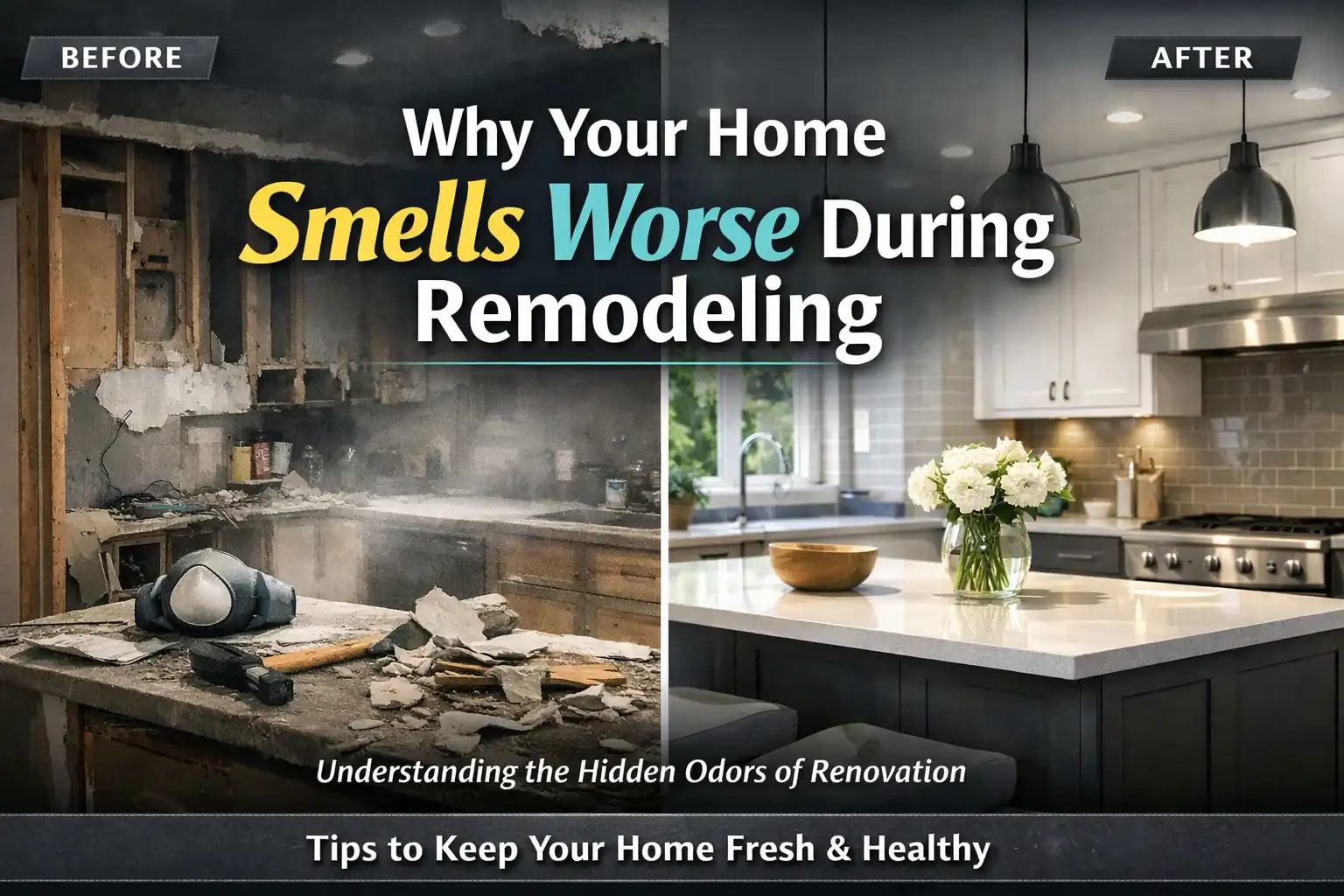
Why your home smells worse during remodeling is one of the most common — and unsettling — concerns homeowners face once construction begins. Even clean renovation projects can introduce sharp chemical odors, sewer-like smells, or lingering musty air that wasn’t there before. While some odors are expected, others signal plumbing, ventilation, or moisture problems that should never be ignored.
At Space Construction, we regularly see how odor issues escalate when plumbing systems are disturbed during remodeling. Working with experienced professionals like All American Plumbing ensures these problems are handled before they become health or structural risks.
What Does Off-Gassing Smell Like During Remodeling?
Many homeowners ask, what does off-gassing smell like? Off-gassing odors are typically sharp, chemical, or “new plastic” smells. They come from new flooring, cabinets, paints, adhesives, and furniture releasing volatile organic compounds (VOCs) into the air.
These odors often intensify during remodeling because older homes were not designed for modern airtight materials. When ventilation is limited, smells linger longer and spread throughout the house.
Is New House Smell Toxic or Just Unpleasant?
The so-called “new house smell” isn’t just unpleasant — it can be harmful in high concentrations. Many VOCs released during remodeling are known respiratory irritants.
According to the U.S. Environmental Protection Agency, prolonged exposure to indoor VOCs can contribute to headaches, nausea, and long-term health effects (EPA indoor air quality guidance).
This raises an important question: is off-gassing dangerous? For sensitive individuals, children, and pets, it absolutely can be — especially in poorly ventilated spaces.
Plumbing Disturbances That Create Bad Odors
Not all remodeling smells come from materials. Plumbing disruptions are a major contributor. When drain lines, vent stacks, or traps are disturbed, sewer gases can escape into living areas.
Common plumbing-related odor sources include:
- Dry or improperly installed drain traps
- Disconnected or blocked vent pipes
- Hidden leaks behind walls
- Stagnant water in unused lines
Homeowners who skip a professional inspection checklist often discover odor issues only after walls are closed.
Why DIY Odor Fixes Rarely Work
Air fresheners, candles, and DIY ventilation tricks only mask smells — they don’t remove the source. This is why DIY solutions fail during remodeling. Odors trapped behind drywall or under flooring continue to release gases long after surface treatments fade.
When plumbing is involved, DIY fixes can make matters worse by sealing problems inside walls, increasing pressure, or blocking proper venting.
How to Get Rid of Off-Gassing Smell Safely
Many homeowners search for how to get rid of off-gassing smell, but few realize it requires both time and airflow. The safest methods include:
- Continuous ventilation using exhaust fans
- Temperature control to accelerate VOC release
- Removing plastic packaging immediately
- Ensuring plumbing vents function correctly
For furnishings, learning how to speed up off-gassing furniture often means isolating new items in ventilated spaces before use.
When Odors Signal Moisture or Water Damage
Persistent musty or sour smells can indicate moisture intrusion or hidden water damage. Remodeling activities sometimes expose weak plumbing joints or old pipe corrosion.
If odors worsen over time instead of fading, reviewing common water damage signs is critical before mold develops.
University building science research confirms that trapped moisture behind new finishes accelerates microbial growth (University mold research).
How Plumbing Ventilation Impacts Indoor Air
Plumbing vents balance pressure and direct sewer gases safely outside. During remodeling, vents may be capped, rerouted, or damaged without immediate symptoms.
The American Society of Plumbing Engineers notes that improper venting is a leading cause of indoor odor complaints after renovations (ASPE venting standards).
This is why professional plumbing oversight matters when walls, ceilings, or layouts are changed.
Living in a Smelly Home During Remodeling
For homeowners staying onsite, odors feel stronger because construction reduces airflow. Following proven guidance for living during remodel helps limit exposure.
If smells cause headaches, nausea, or breathing discomfort, professional intervention should not be delayed.
How Space Construction Prevents Odor Problems
At Space Construction, odor prevention is addressed during planning, not after complaints arise. Our coordination with All American Plumbing ensures drainage, venting, and water lines are properly secured before finishes are installed.
This proactive approach protects air quality, prevents hidden damage, and keeps remodeling projects on schedule.
Conclusion
Why your home smells worse during remodeling usually comes down to off-gassing, disturbed plumbing systems, or hidden moisture. While some odors fade naturally, others warn of serious issues that should never be ignored.
If smells persist, worsen, or resemble sewer gas, scheduling a professional plumbing evaluation is the safest next step. Early action prevents long-term damage, protects indoor air quality, and ensures your remodel improves your home in every way.
FAQs
Why does my house smell bad during remodeling?
During remodeling, materials like paint, adhesives, drywall, and flooring release strong odors known as VOCs (volatile organic compounds). Dust, debris, and disturbed old materials (like pipes or insulation) can also contribute to unpleasant smells.
Are remodeling odors harmful to health?
Yes, some remodeling smells—especially from paints, sealants, and chemicals—can affect indoor air quality. Prolonged exposure may cause headaches, dizziness, or allergies, particularly for children, pets, and people with respiratory issues.
How long do remodeling smells last in a home?
The duration depends on the materials used and ventilation. Light odors may fade in a few days, while stronger smells from paint, varnish, or adhesives can last several weeks without proper airflow and cleaning.
How can I get rid of bad smells during remodeling?
You can reduce odors by improving ventilation, using air purifiers, sealing off work areas, and choosing low-VOC materials. Regular cleaning and professional air duct cleaning can also help remove lingering smells.
Can HVAC systems spread remodeling odors throughout the house?
Yes, your HVAC system can circulate dust, debris, and odors from remodeling areas to other rooms. Cleaning air ducts and replacing filters can help prevent smells from spreading.

0 Comments