Most remodeling problems don’t begin with bad contractors or poor materials. They begin quietly, weeks before construction starts, when a homeowner skips a proper inspection. After more than 15 years in residential remodeling, this pattern is impossible to ignore.
At Space Construction, nearly every “unexpected” delay, budget blowout, or failed inspection we’re asked to fix traces back to one issue a missing inspection step. This guide is the inspection checklist every homeowner needs before remodeling. It’s built from real job sites, opened walls, failed permits, and lessons learned the hard way.
Why Inspections Matter More Before Remodeling Than After
Here’s what many homeowners don’t realize: remodeling exposes what your home has been hiding. Electrical systems that worked fine until walls were opened. Plumbing that held pressure until lines were moved. Structural framing that looked solid but wasn’t designed for change.
Once remodeling begins, every hidden issue becomes more expensive to correct. Pre-remodel inspections give homeowners control by identifying risks before money is committed, preventing permit delays, avoiding mid-project redesigns, protecting resale value, and keeping timelines realistic.
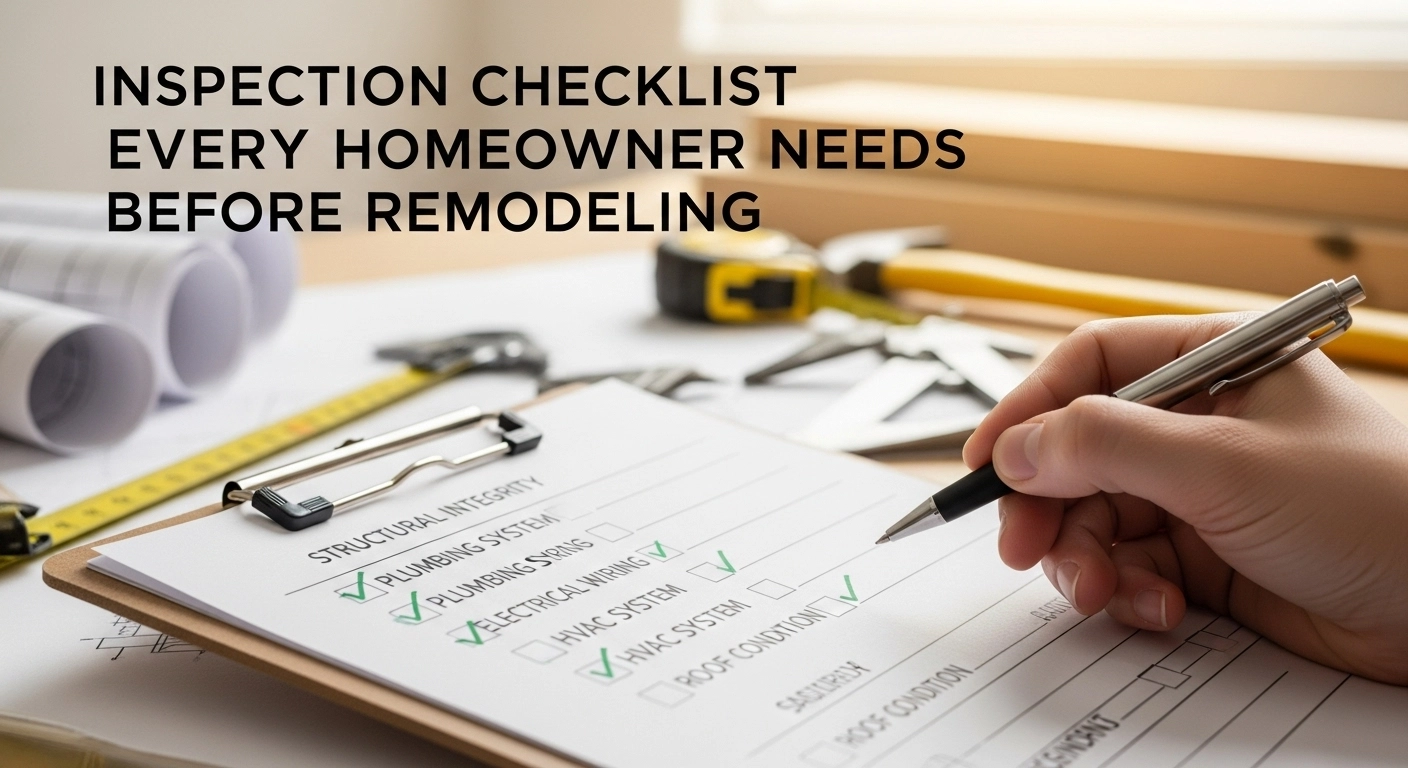
The Inspection Checklist Every Homeowner Needs
Structural Inspection
Structure is non-negotiable. Before remodeling, inspect for foundation cracks, movement, sagging floors, uneven framing, load-bearing wall locations, beam and joist condition, and signs of past structural repairs.
Removing or altering a load-bearing wall without confirmation is one of the most common reasons remodeling projects stall. This mistake alone can shut down construction for weeks.
Electrical Inspection
Electrical systems age silently. A proper inspection should identify outdated wiring, overloaded circuits, improper grounding, panel capacity for new loads, and current code compliance.
Many older homes function day-to-day but fail the moment remodeling increases electrical demand. This is a common cause of permit rejections. Our experience aligns with issues detailed in remodeling common challenges we frequently see in Dallas-area homes.
Plumbing Inspection
Plumbing problems rarely announce themselves politely. Before remodeling begins, inspect supply line materials, drain slope and venting, corrosion, hidden leaks, shutoff accessibility, and water pressure consistency.
We’ve seen full remodels paused because a single concealed leak was discovered only after demolition. Early plumbing inspections prevent this disruption. Related risks are often explained in water damage signs homeowners overlook.
HVAC and Ventilation Inspection
Remodeling changes airflow. Duct routing, return air capacity, kitchen and bathroom ventilation, equipment age, efficiency, and access clearances must be reviewed.
Poor ventilation planning is one of the fastest ways to create comfort issues after remodeling especially in kitchens and bathrooms.
Moisture and Water Intrusion Inspection
This is where many remodels fail silently. Inspect roof penetrations, window flashing, wall cavities near plumbing lines, subfloor moisture levels, exterior grading, and drainage paths.
Moisture discovered late doesn’t just delay projects it multiplies costs. Many homeowners encounter this after ignoring early warning signs detailed in water restoration timelines.
Permits and Code Compliance: Where Most Homeowners Get Stuck
Passing city inspection is far easier when planned early. Before remodeling, verify permit requirements, zoning restrictions, recent code updates, and inspection milestones.
Many homeowners assume permits can be handled later. That assumption causes more project delays than almost anything else. Early inspection informs design decisions and speeds approvals.
What Homeowners Get Wrong About Inspection Checklists
From real projects and homeowner forums, the same mistakes repeat: treating inspections as a formality, skipping inspections to save money, assuming previous renovations were done correctly, relying only on visual checks, and ignoring small warning signs.
Inspections aren’t about finding problems they’re about preventing disasters.
A Real Remodeling Lesson From the Field
Early in our work at Space Construction, we inherited a remodel already in demolition. Walls were open. Materials were ordered. Then the inspection failed. Hidden structural issues required redesign, budgets increased, and timelines doubled.
That project changed how we work permanently. Now, inspections happen before designs are finalized, not after construction starts.
When a Full Inspection Is Absolutely Non-Negotiable
A full inspection is mandatory for homes over 20 years old, structural changes, kitchen or bathroom remodels, electrical upgrades, plumbing relocation, and load-bearing wall removal.
Skipping inspections in these cases is not a risk it’s a guarantee of problems.
The Hidden Cost of Skipping Inspections
From real remodeling projects, skipped inspections often lead to change orders, permit rejections, schedule delays, budget overruns, and reduced resale value.
The cost of inspections is minimal compared to correcting missed issues mid-project.
How Space Construction Approaches Inspections Differently
At Space Construction, inspections are not an afterthought they’re the foundation. We inspect first so designs reflect reality, budgets remain predictable, projects move forward confidently, and homeowners stay informed.
Final Thoughts: Inspections Are Not Optional
Remodeling should improve your home, not uncover hidden nightmares. The inspection checklist every homeowner needs is about preparation, not fear.
After 15+ years in remodeling, the difference between smooth projects and stressful ones is almost always decided before construction begins.
Ready to Remodel With Confidence?
If you’re planning a remodel and want to avoid surprises, delays, and costly mistakes, inspections come first.
Contact Space Construction today to begin your remodeling process the right way with clarity, preparation, and experience on your side.
FAQs
Why is an inspection necessary before starting a remodel?
Inspections before remodeling uncover hidden structural, electrical, plumbing, or moisture issues that aren’t visible during everyday use. Identifying these problems early prevents permit failures, budget overruns, and construction delays once walls are opened and work is already underway.
Can skipping inspections really cause major remodeling delays?
Yes. Skipping inspections often leads to failed permits, unexpected redesigns, and work stoppages mid-project. Issues discovered after demolition are far more expensive and time-consuming to correct, frequently doubling timelines and increasing costs beyond the original remodeling budget.
What areas of the home should always be inspected before remodeling?
Before remodeling, inspections should cover structural framing, electrical systems, plumbing lines, HVAC and ventilation, moisture intrusion, and code compliance. These areas are most affected when layouts change and are the most common sources of unexpected problems during construction.
Are inspections still important if my home was renovated before?
Absolutely. Previous renovations may not meet current building codes or may have been done incorrectly. Inspections verify the condition and safety of existing work, ensuring new remodeling plans don’t rely on faulty or non-compliant construction.
What happens if inspections find problems before remodeling begins?
When issues are found early, they can be addressed efficiently within the planning stage. This allows designs, budgets, and timelines to be adjusted realistically, preventing costly change orders and protecting the overall success of the remodeling project.

0 Comments