Metal framing has become one of the most reliable structural systems in modern construction, especially in residential, commercial, and industrial projects. Whether you are building a new property, remodeling interior walls, or designing a load-bearing structure, choosing the right metal framing contractors directly affects project strength, safety, cost, and long-term durability.
Builders, architects, and homeowners often prefer metal studs over wood because steel framing is lighter, fire-resistant, code-compliant, and dimensionally stable in all climate conditions.
But while metal framing offers clear advantages, understanding the true cost, installation process, and contractor selection criteria can feel overwhelming, and many homeowners follow full remodeling guides such as Steps-by-Step Guide to a Successful Whole House Remodeling to understand where metal framing fits in the entire construction process.
This guide explains everything you need to know from material types to cost estimates, step-by-step installation, contractor evaluation, and the most important questions to ask before signing a contract.
What Do Metal Framing Contractors Do?
A metal framing contractor specializes in the design, layout, fabrication, and installation of steel framing systems that support walls, ceilings, and load-bearing structures in buildings. Unlike traditional carpenters, metal framing professionals work with cold-formed steel studs, galvanized track systems, specialty fasteners, and industry codes defined by ASTM, AISI, and ICC, which are especially important during home remodeling in Dallas where building regulations, climate conditions, and multi-trade coordination require precise framing standards.
Contractors handle a broad range of work, including:
Types of Metal Framing Work
- Interior non-load-bearing walls
- Exterior load-bearing systems
- Ceiling grid framing
- Fire-rated assemblies
- Seismic and high-wind framing
- Insulated wall systems
- Commercial drywall framing
- Multi-story steel stud framing
In large projects, metal framing contractors often collaborate with architects, structural engineers, electricians, HVAC teams, and drywall installers to ensure alignment with the blueprint and local building codes, especially when the project involves complicated layouts or hidden structural risks that appear during remodeling as explained in Common Challenges in House Remodeling and How to Overcome Them which highlights real-world structural issues discovered during construction.
Metal Framing Materials: What Contractors Use and Why
Not all steel framing systems are equal. A professional contractor selects material type based on building loads, fire resistance, moisture exposure, and design complexity.
The two most common categories are:
1. Light-Gauge Steel (LGS)
Used for:
- Interior partition walls
- Ceiling grids
- Low-load structures
Benefits:
- Light weight
- Flexible design
- Affordable pricing
2. Heavy-Gauge Steel
Used for:
- Exterior load-bearing walls
- Multi-floor support
- Structural reinforcement
Benefits:
- High strength
- Long life expectancy
- Fire resistance
Material Comparison Table
Below is a quick overview to understand price differences and use cases.
| Material Type | Best Use Case | Cost per Sq. Ft. | Strength | Code Standard |
| Light-Gauge Steel | Interior walls | $4 – $8 | Medium | ASTM C645 |
| Heavy-Gauge Steel | Load-bearing | $9 – $16 | High | AISI S100 |
| Galvanized Steel | Wet areas | +10% material | High | Fire Rated |
Note:
Prices can vary due to steel rates, supply chain variables, project complexity, and contractor experience.
How Much Do Metal Framing Contractors Cost?
Metal framing cost depends on several factors:
- Architectural design
- Steel gauge and type
- Labor rates in your location
- Building code requirements
- Multi-story layout
- Engineering scope
- Timeline and scheduling
On average, metal framing installation costs between $6 to $20 per square foot, but specific project details can shift the final estimate.
National Cost Overview
| Project Type | Average Cost | Typical Timeline |
| Residential Interior Walls | $6 – $11 / sq. ft. | 1–2 weeks |
| Commercial Interior Framing | $8 – $14 / sq. ft. | 3–8 weeks |
| Load-Bearing Steel Framing | $12 – $20 / sq. ft. | 6–12 weeks |
Professional contractors normally provide a detailed cost breakdown that includes:
Cost Breakdown
- Studs and track material
- Fasteners, anchors, screws
- Welding (if required)
- Permit and inspection fees
- Waste factor (typically 5–10%)
- Transportation & equipment
- Labor cost per sq. ft.
If accuracy matters, request a written estimate after blueprint review.
Metal Framing Installation Process: Step-by-Step
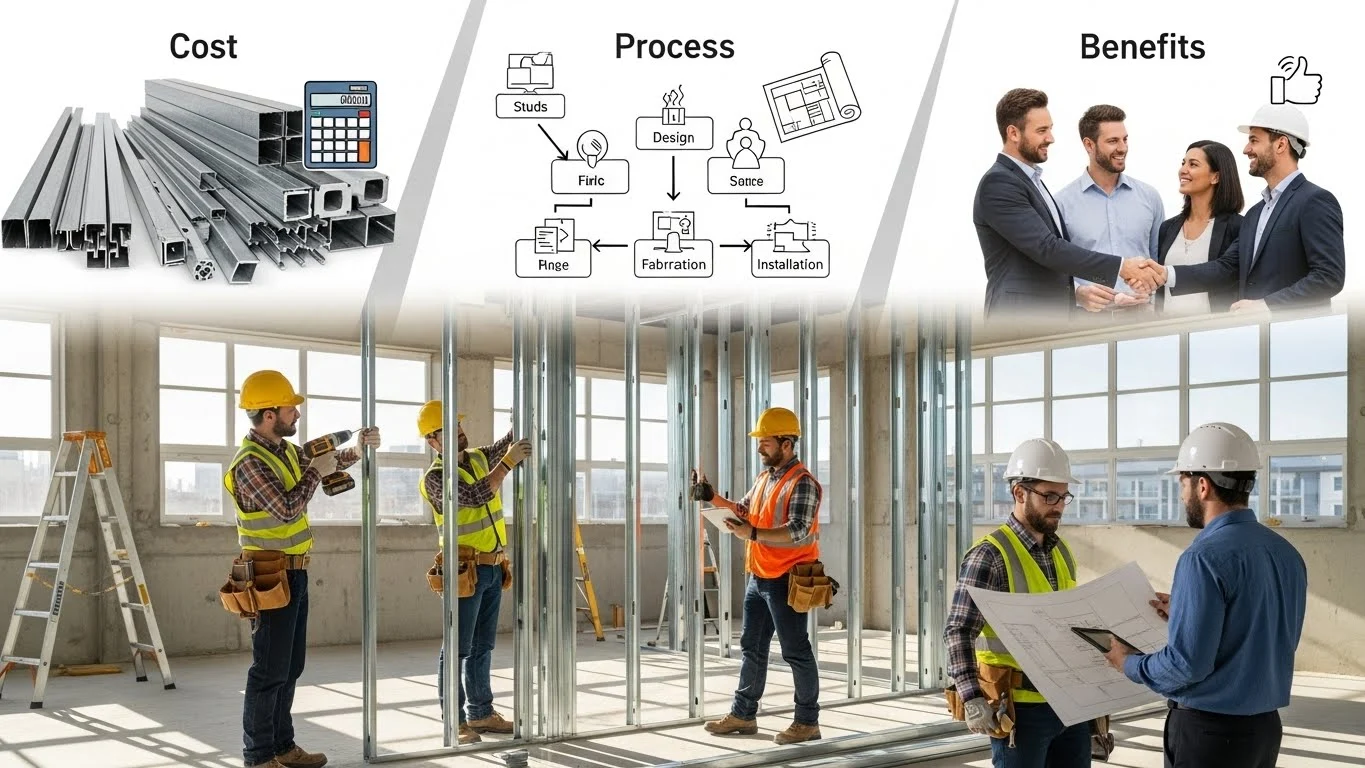
Professional contractors follow a systematic process that ensures compliance, safety, and structural strength. While each project can differ, the workflow typically includes:
1. Planning & Site Assessment
- Review architectural drawings
- Confirm building code requirements
- Identify load points
2. Layout & Marking
- Measure and mark wall lines
- Confirm alignment with ceiling grid
- Establish stud spacing
3. Track Installation
- Anchor metal track to floor and ceiling
- Install fire-rated materials if needed
4. Stud Placement
- Insert steel studs into track
- Set width and spacing (often 16” O.C.)
- Apply bracing for stability
5. Fastening
- Self-tapping screws
- Anchors for load points
6. Inspection
- Compliance with ASTM/AISI standards
- Fire-stopping verification
7. Drywall & Finish Work
Once framing is complete, electricians and other trades join in, followed by drywall installation and finishing.
Why this matters:
Understanding the process helps you judge contractor expertise and timelines.
Benefits of Hiring Professional Metal Framing Contractors
Choosing skilled professionals is not just about labor it ensures long-term building safety and structural precision.
Major Benefits
1. Fire Resistance
Steel doesn’t ignite like wood and helps meet fire safety codes.
2. Structural Stability
Metal doesn’t warp, rot, or expand with humidity changes.
3. Strength-to-Weight Ratio
Steel studs are lighter yet stronger than wood, making them ideal for tall walls and suspended ceilings.
4. Sustainability
Steel is 100% recyclable and reduces deforestation.
5. Lower Maintenance Cost
No termite damage, warp, mold, or cracking issues.
How to Choose the Right Metal Framing Contractors
The final decision stage is where most homeowners and builders struggle choosing a contractor who is qualified, experienced, and reliable.
Use these criteria when evaluating:
1. License & Certification
Ensure contractors are:
- Licensed in your state
- Insured and bonded
- Trained for OSHA safety standards
2. Experience with Similar Projects
Ask for:
- Previous project examples
- Photos and drawings
- Client references
3. Knowledge of Codes
Professional framing teams must understand:
- ASTM C754
- AISI S100
- ICC building codes
- Fire-resistance rating requirements
4. Transparent Pricing
Good contractors provide clear cost sheets:
- Materials vs labor
- Estimated timeline
- Any potential add-ons
5. Warranty & Support
Ask:
- Do you offer warranty on framing work?
- Is follow-up inspection free?
Important Questions to Ask Contractors
Before hiring, ask:
- How many years of experience?
- Which steel brands do you use?
- Any additional fees?
- What is your project delivery timeline?
- How do you handle code inspections?
- Are permits included?
These questions help filter out underqualified or low-budget contractors.
Final Thoughts
Hiring professional metal framing contractors ensures proper design, precise installation, and long-term durability backed by safety codes, and many property owners prefer working with local framing specialists such as Framing Contractors in Flower Mound to make sure the framing work follows regional building codes and support requirements. From material selection to installation workflow and cost transparency, expertise at every step reduces risk and guarantees a structurally sound building.
To get the best results:
- Compare multiple quotes
- Ask about previous work
- Confirm code standards
- Review materials used
- Understand timeline and warranty
A strong metal framing foundation makes every later stage electrical, HVAC, drywall, painting easier and safer.
FAQs
1. How much do metal framing contractors charge?
Contractors charge between $6 to $20 per sq. ft., depending on material type, load requirements, and labor rates.
2. Is metal framing better than wood?
Yes steel framing is stronger, fire-resistant, and does not rot, warp, or attract termites.
3. How long does metal framing take?
A residential interior framing job may take 1–2 weeks, while large commercial projects can take 6–12 weeks.
4. Do contractors handle building permits?
Experienced contractors normally handle permits, inspections, and code compliance as part of the project.
5. What standards do metal framing contractors follow?
Most follow ASTM, AISI, ICC, and local building codes.

0 Comments