
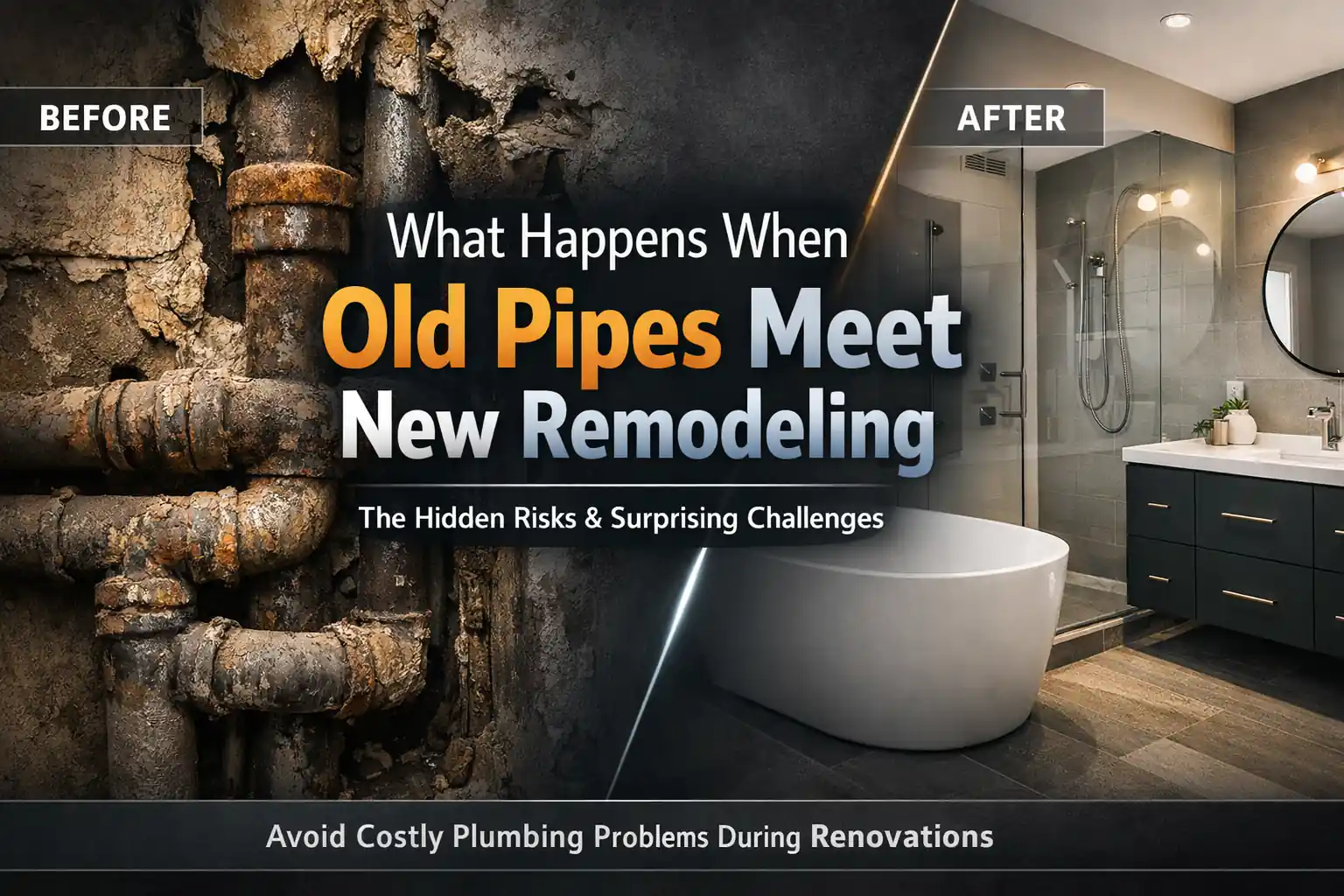
What happens when old pipes meet new remodeling is a question many homeowners don’t think about until problems start showing up behind freshly installed walls and floors. Remodeling an older home without addressing aging plumbing can turn a beautiful upgrade into a costly nightmare. From hidden leaks to sudden plumbing emergencies, outdated pipes often fail under the pressure of modern fixtures and redesigned layouts.
At Space Construction, we see this issue regularly during renovation projects. That’s why experienced plumbing coordination with All American Plumbing is essential before walls are closed and finishes are installed.
Why Old Plumbing Struggles With Modern Remodeling
Older homes were built for simpler water demands. When you add high-efficiency fixtures, multiple bathrooms, kitchen islands, and upgraded appliances, the existing plumbing system often can’t keep up.
Common materials found in older homes include galvanized steel, cast iron, and even lead pipes. Over time, these materials corrode, narrow internally, and become brittle. Remodeling increases water pressure demands, which exposes weak points almost immediately.
Hidden Risks When You Don’t Replace Old Pipes
One of the biggest dangers is that plumbing issues remain invisible until damage is severe. New drywall, tile, and cabinetry can conceal slow leaks for months.
According to the U.S. Environmental Protection Agency, hidden water leaks are one of the leading causes of mold growth and indoor air quality issues in residential buildings (EPA mold guidance).
By the time stains or odors appear, the repair scope often expands far beyond plumbing.
How to Update Plumbing in an Old House During Remodeling
Updating plumbing in an old house should be part of the remodeling plan—not an afterthought. A professional assessment evaluates pipe condition, water pressure, drain flow, and venting capacity.
Before starting any renovation, homeowners should follow a full inspection checklist to identify plumbing vulnerabilities early.
Modern plumbing updates typically include:
- Replacing outdated supply lines with PEX or copper
- Upgrading drain and vent systems
- Improving shutoff access
- Ensuring code compliance for new layouts
Cost of Replacing Pipes in an Old House
The cost of replacing pipes in an old house depends on size, layout, accessibility, and pipe material. While partial upgrades may seem cheaper upfront, they often lead to repeat repairs.
Many homeowners underestimate the true updating plumbing in old house cost because they don’t account for future failures. Re-piping during remodeling is significantly less expensive than tearing into finished spaces later.
For context, university housing studies have shown that aging pipe systems are among the top contributors to water damage claims in remodeled properties (University plumbing research).
Re-Plumbing an Old House: When It’s the Smart Move
Re plumbing old house projects make the most sense when:
- Pipes are over 40 years old
- Water pressure fluctuates
- Rust-colored water appears
- Multiple leaks have already occurred
Replacing plumbing in old homes ensures your remodel doesn’t outpace the infrastructure supporting it.
Replace Plumbing Old House Before Finishes Go In
Installing new flooring, cabinets, and tile over failing pipes is one of the most expensive remodeling mistakes homeowners make. Water damage restoration costs can easily exceed the original renovation budget.
If you’re planning layout changes, reviewing remodeling challenges early helps avoid surprise delays and plumbing rework.
How Plumbing Emergencies Start During Remodeling
Even small plumbing miscalculations can trigger major problems. Cutting into old pipes, pressurizing fragile joints, or rerouting drains without proper slope often leads to leaks or backups.
Knowing how to handle a plumbing emergency during remodeling is critical. Shut off water immediately, avoid temporary patches, and call licensed professionals before damage spreads.
The American Society of Plumbing Engineers stresses that improper remodeling connections are a leading cause of residential pipe failure (ASPE plumbing standards).
Why DIY Plumbing Fails in Remodeling Projects
DIY plumbing often fails because homeowners underestimate system complexity. Venting, pressure balance, and code requirements are easy to get wrong and hard to fix once walls are closed.
Professionals understand how plumbing interacts with structural elements, electrical systems, and long-term performance. This expertise protects both the remodel and the home.
How Space Construction Coordinates Plumbing Success
At Space Construction, remodeling projects are planned with infrastructure in mind. Our collaboration with trusted plumbing professionals like All American Plumbing ensures systems are upgraded before cosmetic work begins.
This approach reduces delays, prevents hidden damage, and protects your investment long after remodeling is complete.
Conclusion
What happens when old pipes meet new remodeling depends entirely on preparation. Ignoring outdated plumbing can lead to leaks, mold, emergency repairs, and costly tear-outs. Addressing plumbing early allows your remodel to perform as beautifully as it looks.
If your home has aging pipes and you’re planning a remodel, scheduling a professional plumbing evaluation is the smartest next step. One assessment today can prevent years of frustration tomorrow.

0 Comments