
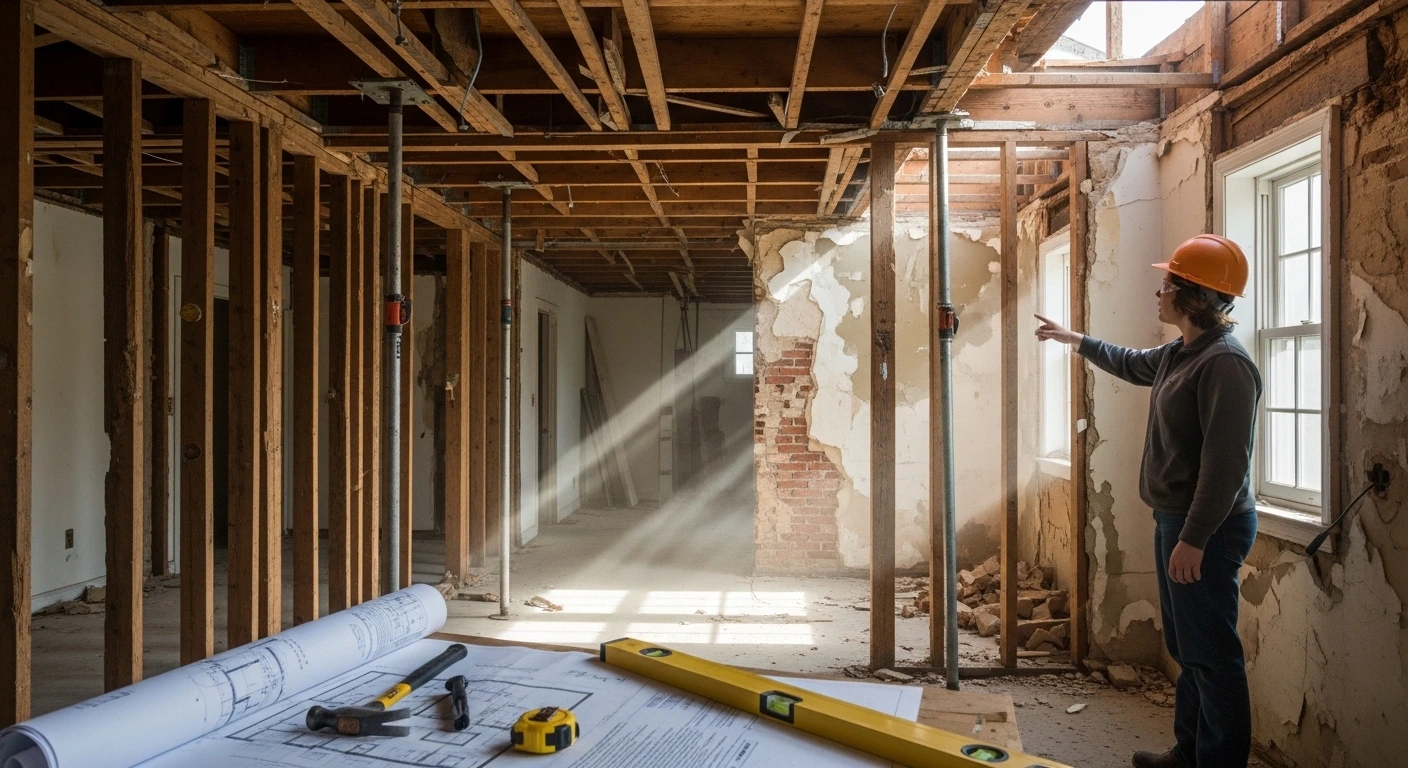
Remodeling a house with structural damage is one of the most challenging renovation projects a homeowner can face. Structural issues go beyond cosmetic flaws they strike at the core stability of your home and require careful evaluation, proper planning, and expert intervention if you want a safe, valuable, and long-lasting renovation.
What is Structural Damage to a House?
Structural damage refers to problems affecting the foundational or load-bearing elements of a home things like the foundation, framing, beams, and roof supports. When these components can no longer reliably bear the loads they are designed for, the integrity of the entire house is compromised. A house undergoing structural failure can develop sagging floors, bowing walls, cracked foundations, and misaligned doors and windows. These signs often suggest that simple cosmetic fixes won’t be enough.
What Causes Structural Damage in Remodeling a House?
Structural damage can result from a wide range of factors. Some are natural, others are man-made:
- Foundation Settlement & Soil Movement: Soil expansion, contraction, or shifting can shift foundations, causing cracks and instability.
- Water Intrusion & Rot: Leaks, damp soil, and poor drainage attack wood and foundation materials, weakening them over time.
- Poor Original Construction: Hidden defects or inadequate load-bearing design can emerge years after a house is built.
- Natural Disasters: Flooding, earthquakes, and storms can move soil, collapse walls, or sag roofs.
Understanding these causes helps you plan a remodel that addresses root issues not just the visible symptoms.
Can You Sell a House with Structural Damage?
Technically, you can list a property that has structural problems, but few buyers will pursue a home without a clear plan to fix the issues. A structural defect will typically lower market value and scare off unprepared buyers. In many regions, you must disclose known structural issues, and an inspection might be required before sale. Most agents and home inspectors recommend securing professional home renovation and repair estimates before trying to sell. This protects you from legal pitfalls and improves buyer confidence.
DIY vs. Professional Remodeling: Why DIY Fails
For minor surface issues like repainting walls or replacing fixtures a confident DIYer can deliver good results. But structural damage is another category entirely. Reasons DIY approaches fail include:
- Lack of Structural Understanding: Without engineering knowledge, it’s easy to misdiagnose the root problem. What looks like a crack in drywall could be foundation shift or beam failure.
- Hidden Hazards: Structural problems can hide behind finished walls and under floors. Without proper tools and training, DIY fixes can make the situation worse.
- Building Code Compliance: Structural work is subject to strict codes and permits. DIY solutions often violate regulations, leading to fines or forced rework. For more on how permits factor into remodeling, see our house building permits guide.
In short, attempting to remodel a structurally compromised house without professional support is risky. Even well-intentioned DIY efforts can reduce safety and long-term value.
Steps for Remodeling a House with Structural Damage
1. Conduct a Thorough Structural Inspection
Before you start demo or design, hire a qualified structural engineer or licensed contractor. They will:
- Identify the underlying causes of damage.
- Recommend necessary repairs or reinforcements.
- Create a safe plan before you remodel walls, kitchens, bathrooms, or additions.
Professionals use specialized tools and training to look beyond what you can see. Many critical signs like uneven load distribution, deflected beams, or shifting footings are subtle to the untrained eye. Conducting this evaluation early saves time and money in the long run.
2. Obtain the Right Permits and Plans
Structural repairs and major renovation work almost always require permits. Building codes exist to ensure safety. Skipping permits may lead to failed inspections or worse, unsafe living conditions. For help navigating permits, check our house building permits guide page.
3. Prioritize Structural Repairs First
Only after the structural framework is secured should you move forward with cosmetic renovations like:
- Kitchen updates
- Bathroom remodels
- Flooring and paint
Attempting to remodel first before addressing sagging floors or unstable walls only results in wasted labor and materials.
4. Plan for Accurate Budget and Timeline
Structural repairs can be unpredictable. Once a contractor begins work, hidden issues may surface. Budget with contingency funds, and set expectations that structural repair and remodeling may extend your timeline beyond simple renovation estimates.
Signs Your House Has Serious Structural Damage
Be alert for these red flags:
- Foundation cracks wider than hairline cracks
- Doors and windows sticking or not closing properly
- Sloping or sagging floors
- Cracks in load-bearing walls or ceiling joints
If you notice these, professional evaluation is essential before proceeding with any remodel. Early detection prevents minor issues from becoming costly disasters.
How a Professional Contractor Helps
A licensed contractor specializing in structural repair and remodeling brings:
- Accurate diagnosis of underlying issues.
- Experienced execution of complex repair processes.
- Permit management and code compliance.
- Coordination of all trades involved plumbing, framing, foundations, roofing, and finishing.
Your home is one of your most significant investments securing it properly during remodeling preserves value and safety.
If you’re evaluating a remodeling project that involves structural concerns, consider a detailed professional inspection before anything else. A qualified expert can assess the issue, recommend solutions, and guide your project toward a successful, long-lasting outcome.
Conclusion
Remodeling a house with structural damage is a complex and high-stakes project. The risks of DIY fixes are clear: misdiagnosis, code violations, and potential safety hazards. With proper professional help, you can resolve underlying issues, protect your investment, and enjoy a beautifully renovated home with confidence. Start with a professional evaluation and plan then proceed with repairs and remodeling in the right order for safety, durability, and peace of mind.
FAQs
What is considered structural damage in a house?
Structural damage affects a home’s load-bearing components, such as the foundation, framing, beams, and roof supports. When these elements weaken or shift, the entire structure can become unstable. Common warning signs include cracked foundations, sagging floors, bowing walls, and misaligned doors or windows.
Can you remodel a house before fixing structural damage?
Remodeling should never begin before structural issues are resolved. Cosmetic upgrades like flooring, kitchens, or painting can be damaged if underlying problems remain. Securing the foundation, framing, and supports first ensures safety, protects your investment, and prevents costly rework later.
Is it possible to sell a house with structural damage?
Yes, but selling becomes more challenging. Structural defects typically reduce property value and discourage buyers. In many areas, disclosure of known issues is legally required. Obtaining professional repair estimates beforehand improves buyer confidence and helps avoid potential legal complications.
Why is DIY structural repair risky?
Structural repair requires engineering knowledge, proper tools, and compliance with building codes. DIY attempts often misdiagnose the root problem and may worsen hidden damage. Incorrect repairs can lead to safety hazards, failed inspections, and additional expenses for professional corrections.
Do structural repairs require permits?
Most structural repairs require permits to meet local building codes and safety standards. Permits ensure inspections are completed properly and that work follows approved engineering plans. Skipping permits can result in fines, legal issues, or complications when selling the property later.

0 Comments