
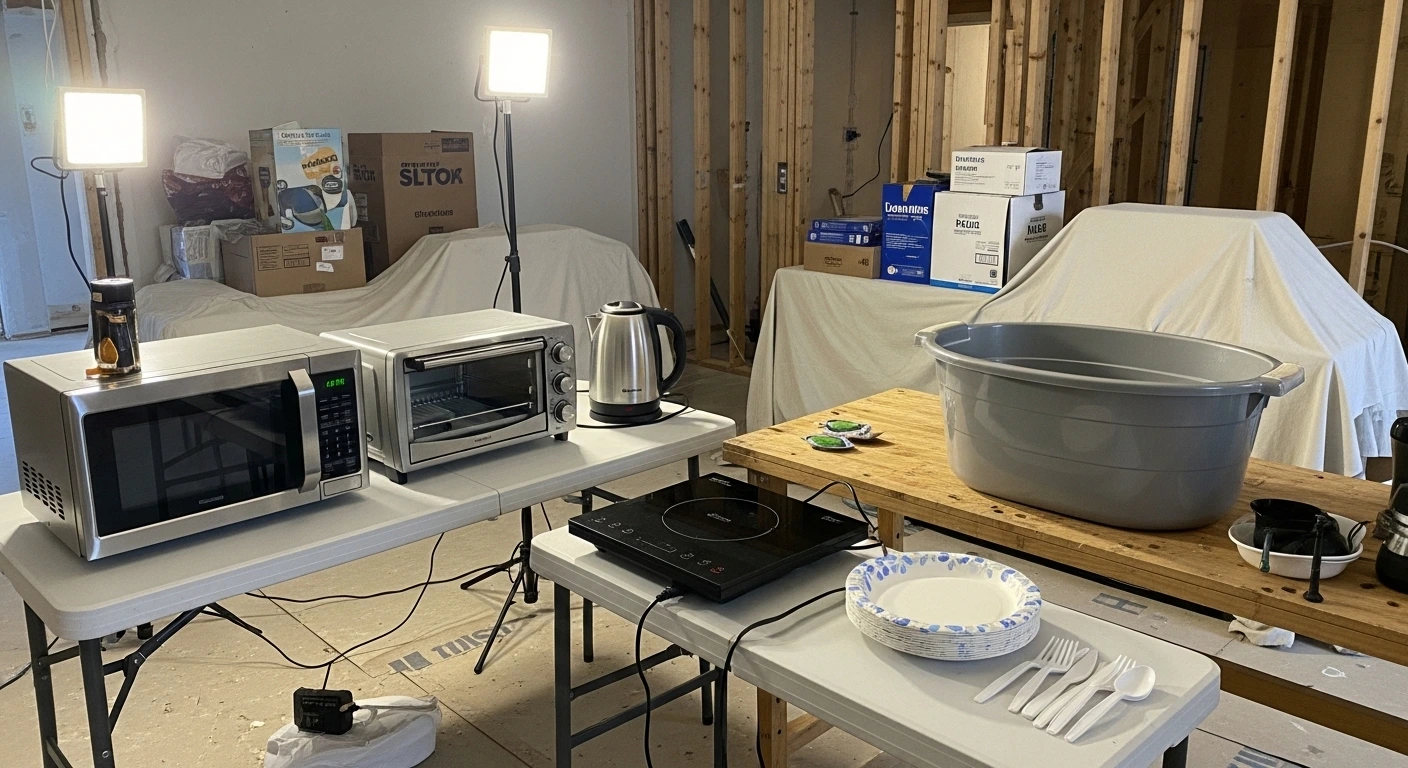
A temporary kitchen setup during remodeling helps maintain daily routines while your primary kitchen is being redesigned, rebuilt, and upgraded. Without proper coordination, however, even a temporary space can create safety concerns, sanitation issues, and unexpected project delays. From makeshift sinks to overloaded circuits, many homeowners underestimate how much planning a kitchen remodel truly requires.
At Space Construction, we’ve worked with homeowners who assumed a temporary kitchen would be simple to arrange. In reality, poor coordination during a kitchen renovation is one of the biggest reasons remodel timelines extend and budgets increase. Below is a clear, remodel-focused guide to setting up a temporary kitchen properly and knowing when professional coordination becomes essential.
What Is a Temporary Kitchen During Remodel?
A temporary kitchen during remodel is a short-term cooking and cleaning space set up outside your main kitchen. It may be located in a garage, dining room, laundry area, or even a spare room. Most setups include a compact refrigerator, microwave, hot plate, coffee maker, and a temporary kitchen sink during remodel to manage basic hygiene.
The goal is functionality not comfort or design. However, even minimal setups must still meet safety and sanitation standards to protect your family’s health.
Why Homeowners Need a Temporary Kitchen
Kitchen remodeling often takes weeks, sometimes months. According to planning timelines outlined in kitchen timeline guides, full renovations commonly disrupt flooring, drainage, and electrical access for extended periods.
A properly planned temporary kitchen allows you to:
- Prepare basic meals without constant takeout
- Wash dishes safely and hygienically
- Maintain family routines
- Reduce stress during long renovation phases
Temporary Kitchen Sink During Remodel: The Biggest Challenge
The sink area is often the most challenging part of a temporary kitchen. While some homeowners attempt quick DIY solutions, improper setup can create leaks, drainage problems, or sanitation concerns that complicate the remodel.
Improper drainage, incorrect venting, and unsecured connections can cause leaks, sewer odors, or even water damage behind walls. Many homeowners don’t realize that even a temporary sink can require code compliance and inspection, especially if drain lines are altered.
For homes already dealing with renovation complexity, overlooking remodel details increases the risk of costly repairs later. This is why professional evaluation especially during major remodels outlined in inspection checklist resources is critical.
Cheap Temporary Kitchen vs. Safe Temporary Kitchen
A cheap temporary kitchen may look appealing upfront, but low-cost shortcuts often create hidden expenses:
- Extension cords overloaded by appliances
- Untrapped drains allowing sewer gases
- Improvised water connections leaking under pressure
- No grease control causing pipe buildup
The EPA highlights that improper food prep areas during home projects increase contamination risks, especially when dust and debris are present (EPA renovation safety guidance).
Temporary Kitchen Rental and Pod Options
Some homeowners explore a temporary kitchen rental or temporary kitchen pod. These self-contained units can include sinks, water heaters, and proper drainage systems.
While convenient, pods still require correct water supply and waste connections. Improper hookup can violate local permit rules and cause pressure imbalances. Before renting, always confirm compatibility with your home’s existing system.
Why DIY Temporary Kitchens Often Fail
DIY solutions fail because kitchens even temporary ones are complex systems. Water pressure, venting, drainage slope, and electrical load all interact. A small miscalculation can cause leaks behind finished surfaces or contaminate clean water lines.
University housing studies show that improper temporary food prep spaces significantly increase sanitation risks during construction (University food safety research).
In many cases, homeowners spend more fixing mistakes than they would have on proper professional installation.
When Professional Remodeling Is Necessary
You should involve a licensed remodeling immediately if:
- You need a temporary kitchen sink installed
- Drain lines must be rerouted
- You smell sewer gas near the setup
- Water pressure fluctuates when appliances run
- Leaks appear during daily use
Professional remodelers understand how to create temporary solutions that won’t compromise long-term system performance. Coordination with remodeling professionals like those referenced in choosing kitchen remodel contractor guidance keeps projects on track.
Health, Safety, and Compliance Considerations
The National Association of Home Builders emphasizes that temporary kitchens must still meet basic safety standards to protect occupants during renovation (NAHB remodeling safety).
Ignoring ventilation, drainage, and sanitation standards can lead to mold growth, bacterial contamination, and long-term damage to your home’s water and moisture systems.
How Space Construction Expertly Supports Your Remodel Projects
Space Construction specializes in coordinating every stage of kitchen remodeling including temporary setup planning. Our approach ensures your remodel remains organized, safe, and aligned with long-term design objectives.
By managing layout transitions, sequencing installations properly, and overseeing all trade coordination, we help homeowners move smoothly from demolition to a fully functional new kitchen.
Conclusion
A temporary kitchen setup during remodeling can make renovation livable or miserable depending on how it’s handled. Shortcuts, especially with remodel, almost always backfire. Proper planning, safe installation, and professional oversight ensure your temporary kitchen supports your remodel instead of complicating it.
If your renovation requires a temporary sink, drainage changes, or utility adjustments, the safest next step is scheduling professional help. A quick consultation can prevent weeks of frustration, unexpected damage, and unnecessary expense.
FAQs
What is a temporary kitchen during remodeling?
A temporary kitchen is a short-term cooking and cleaning space created outside your main kitchen while renovation work is underway. It typically includes small appliances, limited counter space, and a basic sink setup to maintain daily routines safely during construction.
Why is proper planning important for a temporary kitchen?
Without proper planning, temporary kitchens can create safety hazards, sanitation problems, and project delays. Poor coordination may lead to leaks, overloaded circuits, or ventilation issues that affect the remodeling timeline and increase overall renovation costs.
What is the biggest challenge in setting up a temporary kitchen?
The sink area is often the most challenging part. Improper drainage, venting, or loose connections can cause leaks and odors. Even temporary setups must follow safety standards to prevent water damage and protect surrounding finished surfaces.
Are temporary kitchen pods a good option during remodeling?
Temporary kitchen pods can be convenient during full renovations. However, they must integrate properly with your home’s water supply and drainage systems. Improper setup can create compliance issues and unexpected delays in the remodeling schedule.
When should a professional remodeler be involved?
A professional remodeler should be involved if drain lines need adjustment, leaks appear, or ventilation concerns arise. Expert coordination ensures your temporary kitchen supports the renovation instead of causing structural damage or extending project timelines.

0 Comments