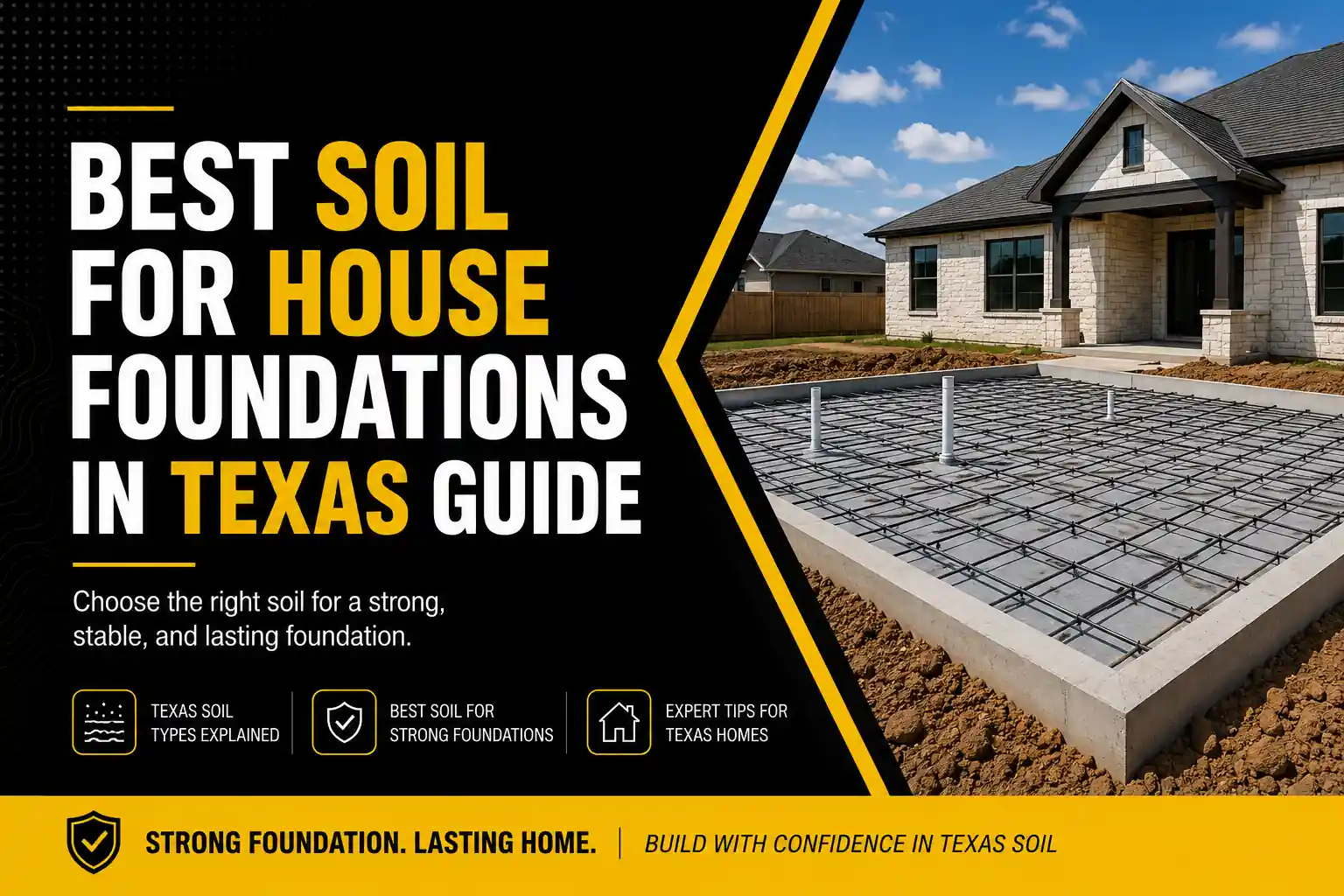
Choosing the best soil for house foundations in Texas is one of the most important decisions homeowners and builders can make before starting construction. Texas properties experience extreme weather shifts, long dry periods, heavy rainfall, and expansive soil movement that directly affect the stability of a home foundation. The wrong foundation soil can lead to cracked slabs, shifting walls, uneven floors, drainage failures, and expensive foundation repairs.
At Space Construction Inc, foundation and remodeling professionals regularly inspect homes suffering from foundation problems caused by poor soil preparation, improper grading, and unstable construction soil. Understanding how soil behaves before construction starts can help property owners avoid costly structural damage later.
Why Soil Matters for Building Foundations in Texas
The type of soil beneath a home directly impacts how well the structure performs over time. Soil foundation movement is one of the leading causes of structural damage across Texas because local soils frequently experience expansion and contraction during seasonal weather changes.
- Some soils absorb water rapidly and swell
- Some soils shrink dramatically during drought conditions
- Others lack enough bearing capacity to support heavy structures
- Poor drainage allows soil to hold water around slabs
- Loose construction soil may settle unevenly
Supporting a foundation requires stable, compacted soil capable of maintaining structural consistency year-round. When soil expands and contracts excessively, it places pressure on concrete slabs, piers, and structural framing systems.
According to the EPA healthy soil guidance, proper soil conditions and drainage management help reduce moisture-related structural issues around residential properties.
Understanding Common Soil Types for Building Construction
Clay Soil
Clay soil is one of the most problematic soil types for building construction in Texas. Expansive clay absorbs water quickly, causing the soil to swell significantly during wet seasons. During dry weather, the same soil contracts and shrinks.
This constant expansion and contraction creates movement beneath the home foundation. Over time, the pressure causes:
- Slab cracks
- Interior wall cracks
- Uneven flooring
- Door alignment problems
- Foundation settlement
Clay-heavy foundation soil often requires engineered preparation methods before construction projects begin.
Sandy Soil
Sandy soil generally provides better drainage than clay soil because it does not retain water as aggressively. It allows moisture to pass through quickly, reducing swelling problems.
However, sandy soil can become unstable when not compacted correctly. Loose sand may shift beneath building foundations and reduce long-term support.
The best soil for building foundation systems often includes balanced sandy compositions mixed with stabilizing materials.
Loam Soils
Loam soils are typically considered among the most stable options for soil construction because they combine balanced amounts of sand silt and clay. Loam soil for foundation applications usually offers:
- Improved drainage
- Better structural stability
- Reduced expansion and contraction
- Higher bearing capacity
- Better moisture balance
Because loam soils provide consistent support, they are commonly preferred in residential construction projects.
Silt Soil
Silt soil contains finer particles that retain water more easily than sand. When saturated, silt becomes unstable and may shift under pressure. Silt-heavy soil and foundation systems often require additional drainage planning.
What Is the Best Soil for House Foundations in Texas?
The ideal soil for building construction in Texas generally combines:
- Strong bearing capacity
- Balanced drainage
- Minimal expansion and contraction
- Stable compaction characteristics
- Moderate moisture retention
In many residential applications, engineered loam-based foundation soil performs best because it balances drainage and structural support. However, no single type of soil works perfectly for every Texas region.
Professional soil testing is essential before building with soil because local geological conditions vary dramatically throughout the state.
The Texas physical geography research from Texas State Historical Association explains how regional soil variations across Texas influence land stability and development conditions.
How Moisture Impacts Soil Foundation Stability
Moisture is one of the biggest threats to home foundation performance in Texas. Soil that absorbs water unevenly creates inconsistent pressure beneath slabs and pier systems.
When soil retains water excessively, it expands. During drought conditions, the same soil contracts. These repeated cycles weaken structural stability over time.
Common causes of moisture-related foundation problems include:
- Poor drainage systems
- Broken plumbing lines
- Improper grading
- Roof runoff concentration
- Flooding near foundations
If you notice moisture-related warning signs around your home, reviewing these water signs can help identify structural risks early.
DIY Soil Preparation Methods Homeowners Commonly Try
Some property owners attempt DIY soil preparation before small construction projects or home additions. Common methods include:
- Adding gravel layers
- Using compacting machines
- Installing basic drainage trenches
- Mixing construction materials into loose soil
- Applying moisture barriers
While minor grading improvements may help temporarily, DIY approaches rarely address deeper soil foundation instability issues.
Why DIY Foundation Soil Solutions Often Fail
DIY foundation preparation frequently fails because most homeowners cannot accurately evaluate underground soil movement, bearing capacity, or moisture migration patterns.
Texas soil conditions are highly unpredictable. Surface-level fixes may temporarily improve appearance while hidden structural movement continues below the slab.
Improper DIY soil construction work can lead to:
- Uneven slab settlement
- Structural shifting
- Drainage failures
- Premature cracking
- Major foundation repairs later
Professional contractors use engineered soil testing, compaction measurements, grading analysis, and moisture control planning to ensure the foundation soil remains stable long-term.
Homeowners planning renovations near structurally sensitive areas should also review structural damage risks before starting construction.
Risks of Using Improper Soil Stabilization Chemicals
Some DIY products claim to stabilize soil using chemical treatments. While certain commercial stabilizers have legitimate construction applications, improper use creates serious risks.
- Chemical imbalance may weaken soil integrity
- Poor application can trap moisture beneath slabs
- Certain products deteriorate over time
- Incorrect mixing affects drainage performance
- Some materials react poorly with clay soil
Signs Your Foundation Soil May Already Be Failing
Many homeowners do not realize soil foundation problems exist until structural damage becomes severe. Watch for these warning signs:
- Cracks in drywall
- Uneven floors
- Sticking windows and doors
- Gaps around trim
- Exterior brick cracking
- Sloping floors
- Pooling water near the home foundation
Homes showing early slab movement should be inspected immediately. Delaying repairs often increases restoration costs significantly.
If slab cracking is already visible, reviewing slab repair information can help homeowners understand the seriousness of the issue.
When Professional Foundation Services Are Necessary
Professional evaluation becomes necessary when:
- The home has visible structural movement
- Large cracks continue expanding
- Drainage systems fail repeatedly
- Water accumulates around foundations
- Soil erosion becomes visible
- New construction projects begin
Professional contractors analyze:
- Soil types for building construction
- Drainage conditions
- Load distribution
- Moisture retention patterns
- Expansion and contraction risks
- Long-term foundation stability
For large residential upgrades or structural additions, homeowners should work with experienced foundation experts who understand Texas soil conditions.
Why Homeowners Choose Space Construction Inc
Space Construction Inc helps Texas homeowners protect their properties with professional foundation evaluations, remodeling services, structural repairs, and construction planning tailored to regional soil conditions.
Clients trust the company because of its:
- Experience with Texas foundation soil challenges
- Comprehensive structural inspections
- Moisture and drainage expertise
- Residential remodeling knowledge
- Long-term construction planning
- Reliable customer communication
Whether you are building a new structure, planning renovations, or dealing with existing foundation problems, professional guidance helps reduce long-term risks.
Homeowners considering major upgrades should also review inspection checklist recommendations before starting construction work.
To discuss your project or schedule an inspection, please contact Space Construction Inc for professional assistance.
Frequently Asked Questions
What is the best soil for building foundation stability in Texas?
Loam soils are generally considered one of the best options because they balance drainage, moisture control, and structural support. However, every construction site is different, so professional soil testing is necessary to determine the safest foundation soil for specific property conditions.
Why does clay soil cause foundation problems?
Clay soil absorbs water quickly and expands during wet conditions. When dry weather arrives, it shrinks and contracts. This constant expansion and contraction creates movement beneath building foundations, often causing slab cracks, uneven floors, and structural shifting throughout the home.
Can sandy soil support a home foundation?
Sandy soil can support the weight of residential structures when compacted correctly. It drains water effectively and reduces swelling risks, but loose sandy soil may shift under pressure if proper construction soil preparation and engineering practices are not followed during construction projects.
How do professionals test soil for building construction?
Professionals perform geotechnical soil testing to measure bearing capacity, moisture retention, drainage conditions, and expansion potential. These evaluations help determine whether the type of soil can safely support building foundations and identify stabilization methods when necessary.
What are signs of failing soil foundation conditions?
Common warning signs include wall cracks, sticking doors, sloping floors, ceiling separation, driveway cracking, and water pooling near the home foundation. These symptoms often indicate unstable soil and foundation movement that requires professional inspection before damage worsens significantly.
Can DIY soil preparation prevent foundation repairs?
Minor grading and drainage improvements may help temporarily, but DIY methods rarely solve deeper soil instability issues. Without professional testing and compaction analysis, homeowners may overlook hidden movement patterns that continue damaging the structure underneath the slab foundation.
Why is moisture control important for supporting a foundation?
Excess moisture causes some soils to retain water and swell, while drought conditions create shrinking and settlement. Maintaining balanced moisture levels around building foundations helps reduce structural movement and prevents long-term expansion and contraction damage.
Conclusion
Selecting the best soil for house foundations in Texas is essential for protecting your property from structural instability, drainage failures, and expensive long-term foundation repairs. Texas soil conditions can change dramatically due to moisture fluctuations, making proper planning and professional evaluation critical before construction begins.
Understanding soil construction, drainage behavior, and foundation soil stability helps homeowners make smarter decisions that protect their investment. When warning signs appear, delaying repairs often increases both structural risks and restoration costs.
If your property is experiencing foundation concerns or you are planning a construction project, please contact Space Construction Inc to schedule a professional evaluation and receive expert guidance tailored to Texas soil conditions.

Space Construction is a premier Dallas construction company specializing in home remodeling, commercial construction, home additions, kitchen and bathroom renovations, custom builds, and restoration services. Our expert team is dedicated to delivering high-quality craftsmanship, timely project completion, and exceptional customer satisfaction. Whether you need a full remodel, room addition, or commercial build-out, Space Construction provides reliable, professional solutions customized to your vision. Contact us today for a free consultation and let us bring your construction project to life!
0 Comments