
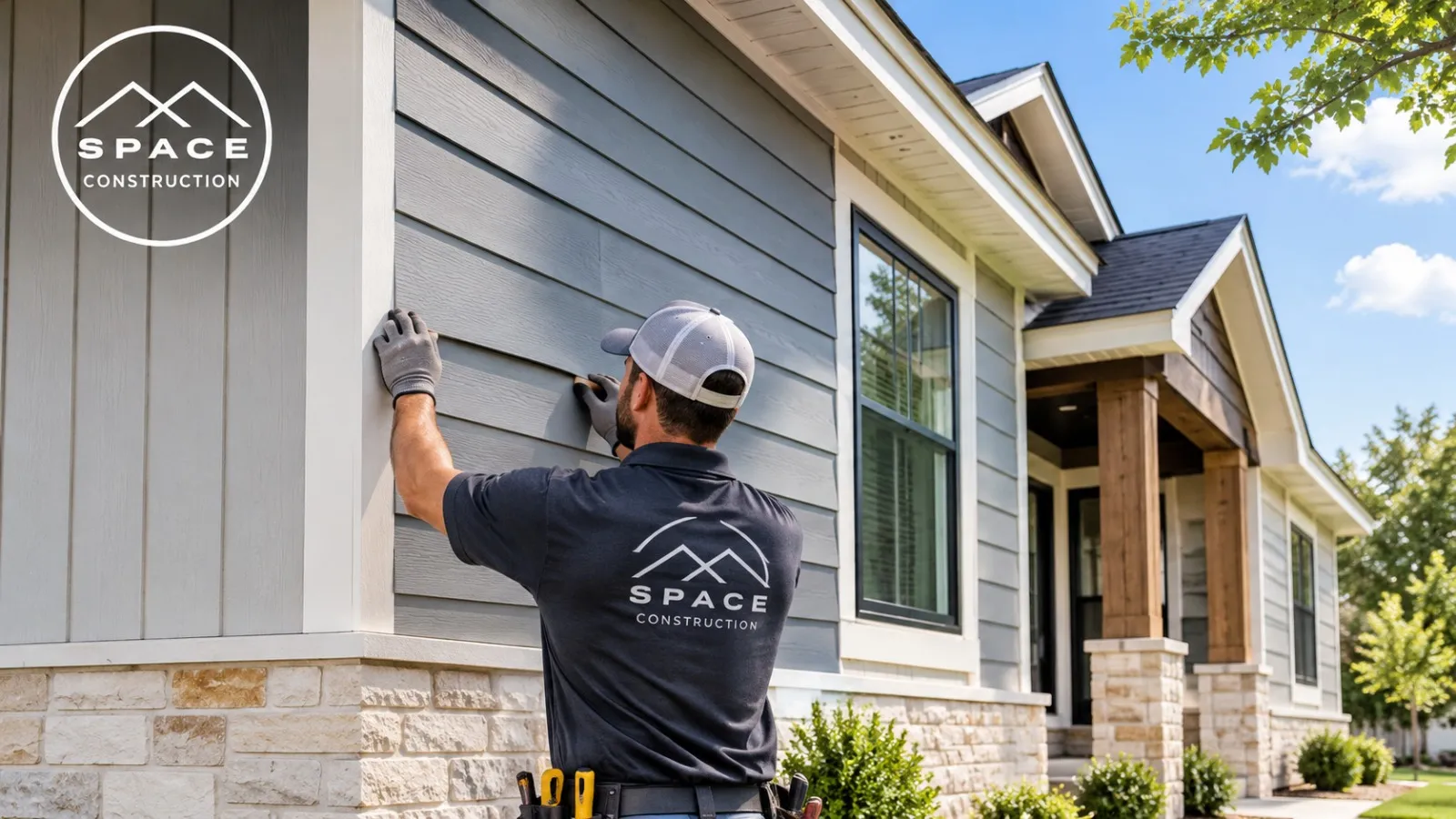
Your siding is the first line of defense for your home. In Texas, it faces intense summer heat, sudden hailstorms, strong winds, and heavy rain, sometimes all within the same week. Choosing the right siding for Texas homes means balancing durability, energy efficiency, maintenance, and curb appeal. At Space Construction Inc., we help homeowners across Flower Mound and the DFW area compare their options and pick materials that suit their home and budget. This guide walks through the key factors, the most popular siding materials, and the benefits each one offers.
Why Siding Matters So Much in Texas
Siding does more than set the look of your home. It shields the walls from moisture, blocks wind, and helps hold steady indoor temperatures. When siding cracks, warps, or loosens, water can reach the sheathing and framing, which leads to rot, mold, and costly repairs.
North Texas adds extra pressure with hail, strong UV exposure, and swings between hot days and cold snaps. A material that performs well in a milder climate may not hold up here, so local conditions should guide your decision.
What to Consider Before You Choose
Before comparing products, think about what matters most for your home:
- Climate resistance: Look for materials that handle heat, UV rays, moisture, and hail impact.
- Maintenance: Some siding needs regular painting or sealing, while others need only occasional washing.
- Energy efficiency: Insulated options and careful installation help reduce cooling costs during long Texas summers.
- Budget: Compare the upfront price with lifespan and upkeep, not just the installation cost.
- Style and neighborhood rules: Check HOA guidelines and choose colors and textures that suit your home’s architecture.
- Warranty: Review both the manufacturer’s material warranty and the installer’s workmanship coverage.
Best Siding Materials for Texas Homes
Vinyl Siding
Vinyl is affordable, low maintenance, and available in many colors and styles. It resists moisture and never needs painting. However, thin or low-grade panels can crack under hail or fade over time. Choose a thicker, quality product, and consider insulated vinyl for better impact resistance and energy performance.
Fiber Cement Siding
Made from cement, sand, and cellulose fibers, fiber cement is one of the most popular choices for Texas homes. It resists fire, pests, rot, and strong winds, and it holds paint well. It costs more than vinyl and requires skilled installation, plus periodic repainting and caulking, but its durability makes it a strong long-term investment.
Brick
Brick is a classic option across Texas. It is fire resistant, handles heat well, and needs very little upkeep. The upfront cost is higher, and mortar joints may need occasional repair, especially if foundation movement causes cracking.
Stone Veneer
Natural or manufactured stone veneer adds texture and character. Many homeowners use it as an accent on lower walls, entryways, and chimneys. It is durable and weather resistant, which makes it a good partner for other siding materials.
Engineered Wood Siding
Engineered wood gives you the warm look of real wood with added resistance to moisture and insects. It is lighter than fiber cement and usually more affordable than natural wood. Proper sealing at cuts and edges is essential, and it needs repainting from time to time.
Metal Siding
Steel and aluminum siding resist fire, pests, and rot, and they offer a clean, modern look. Thinner panels can dent from hail, so a heavier gauge is worth considering for storm-prone areas.
Benefits of Choosing the Right Siding
The right material pays off in several ways. You get stronger protection against storms and moisture, lower energy use when the siding is paired with good insulation, and less time and money spent on upkeep. Fresh, well-matched siding also boosts curb appeal and can strengthen resale value. Most importantly, a durable product means fewer storm-related repairs down the road.
Why Professional Installation Matters
Even the best material fails if it is installed poorly. Proper flashing, a water-resistant barrier, correct fastening, and sealed joints make the difference between siding that lasts and siding that leaks. Professional siding installation protects your investment and helps you get the full performance of the material you choose. Our team also manages permits and inspections, so the process stays organized from start to finish.
Frequently Asked Questions
What is the best siding for Texas homes?
There is no single best option. Fiber cement and brick are strong choices for durability, while vinyl suits tighter budgets. Your budget, style, and weather exposure should guide the decision.
Is vinyl siding good for Texas heat?
Quality, thicker vinyl performs well, but low-grade panels can fade or warp over time. Choose products rated for high temperatures and make sure they are installed with room for expansion.
Does siding help lower energy bills?
Yes. Insulated siding and tight installation reduce heat transfer, which can ease the load on your air conditioning in summer.
How often should I inspect my siding?
Check it at least once a year and after major storms. Look for cracks, gaps, loose panels, and water stains.
Does Space Construction offer free estimates?
Yes. You can request a free estimate through our website or call our team to discuss your siding project.
Final Thoughts
The right siding protects your home, lowers upkeep, and improves its look for years to come. Compare materials based on Texas weather, your budget, and the style you want. Ready to upgrade your exterior? Call Space Construction Inc. at (469) 397-4600 or request a free estimate today.

0 Comments