
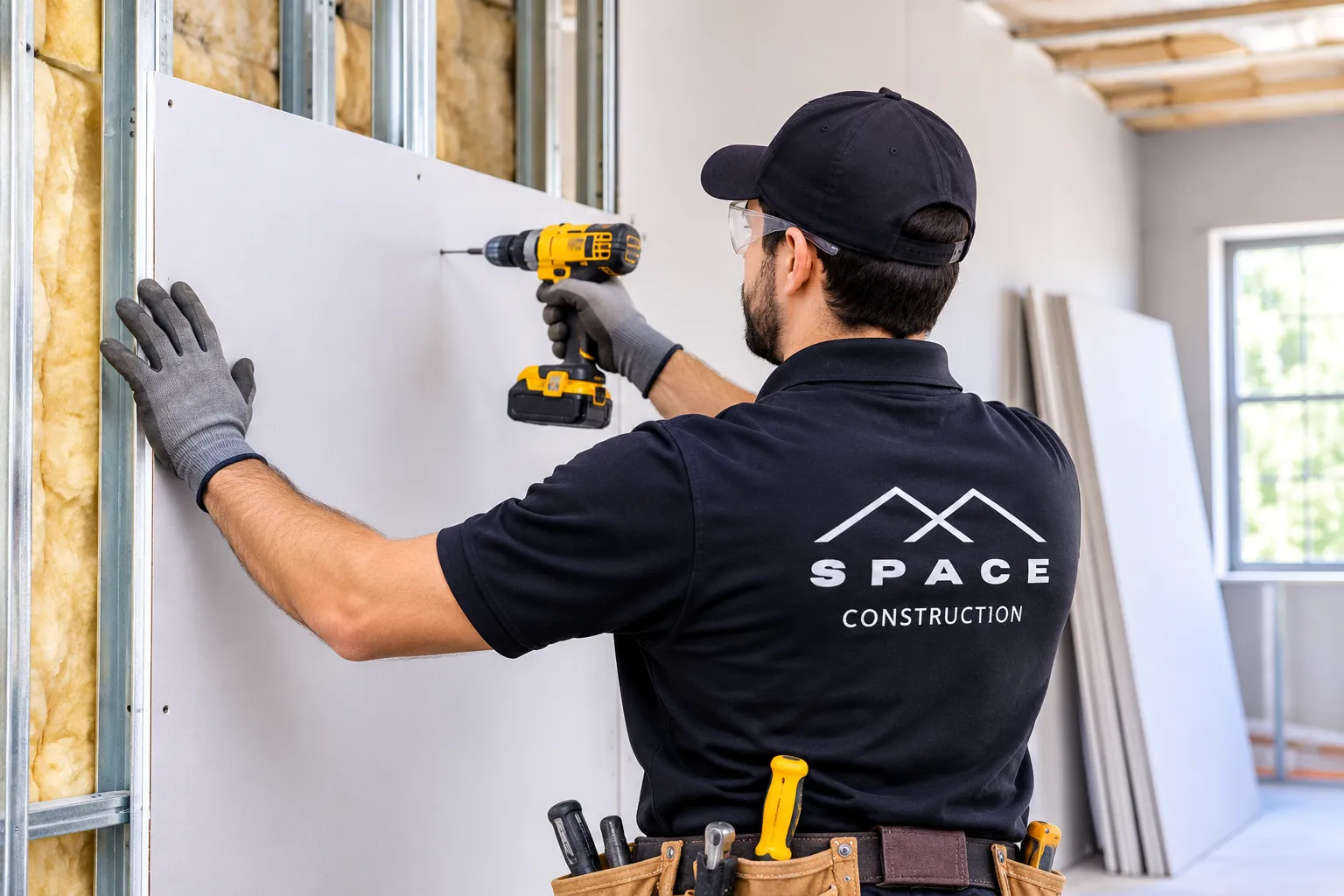
A small crack in a wall rarely causes worry. You fill it, paint over it, and move on. But what happens when it returns a month later? At Space Construction, we see this loop often in homes around Flower Mound and the wider DFW area. Owners patch the same spot three times before they learn the board behind it has already failed.
Sometimes a patch does the job. Other times, drywall installation saves you money and stress in the long run. This guide covers the warning signs that point to replacement, your repair options, how the job works, and what Texas homeowners usually pay.
Why does this matter now? North Texas clay soil shifts with every wet and dry season, and older homes carry decades of small leaks and settling. Walls take the hit first. Learn the signs early, and you can fix the cause once instead of covering the symptom again and again.
Water damage, cracks and sagging: when a patch will not hold
Not every flaw on a wall means the board has failed. Some are cosmetic, and a skilled finisher can fix them in an afternoon. Others show that the gypsum core or paper face has lost its strength, and no amount of joint compound will bring it back.
Water causes the most damage. A brown ring on a ceiling, a bubbled patch near a bathroom, or a wall that feels soft under your thumb points to moisture inside the board. According to the EPA’s mold guidance (2001), wet building materials should dry within 24 to 48 hours, or mold can begin to grow. Drywall that stays damp past that window usually has to come out.
So what should you look for? These signs most often mean replacement beats repair:
- Soft, crumbly or swollen board after a leak
- Black, green or fuzzy growth on the surface or paper
- Cracks that return within weeks of a patch
- Sagging ceiling panels or lifting seams
- Nail pops and screw pops across several walls at once
- Wide cracks over doors and windows after a wet or dry season
Cracks need a closer look in our area. Expansive clay under many DFW homes swells in wet weather and shrinks in dry spells, which moves the slab and stresses the walls. A hairline crack over a door frame is common. A crack wider than a quarter inch, or one that keeps growing, can mean the foundation needs attention before any new board goes up.
Here is a case we see often. A Flower Mound homeowner patched a ceiling stain twice after storms, and it kept coming back. Once a crew opened the area, the board was soft across four feet and the insulation above was wet. A bad roof flashing fed the leak. Cutting out the damaged panels and fixing the flashing solved it for good.
A licensed contractor in North Texas offers a simple test: press a screwdriver tip into the board with light pressure. If it sinks in, the board has failed and a patch will not last. Turn off the power before you test a wet ceiling.
Patching, panel replacement or full replacement compared
Options range from a quick patch to a full room of new board. The right one depends on how far the damage spreads and what caused it. Small holes, dents and hairline cracks suit a patch. Damage larger than a sheet or two usually calls for panel replacement.
When mold, repeated leaks or sagging affect most of a room, full drywall installation on the wall or ceiling is the safer path. You fix the cause once and finish with a flat, even surface. Patching a failing wall again only adds layers over a weak base.
Board type matters too. Standard half-inch panels suit most living areas. Moisture-resistant board, often called green board, belongs in bathrooms and laundry rooms. Mold-resistant purple board costs more but handles damp rooms better. Garage walls and ceilings shared with living space follow fire-separation rules in the International Residential Code, which most Texas towns adopt.
How do these options compare side by side? Costs below are national 2026 averages from Angi, so DFW quotes will vary.
| Option | Typical cost | Best for | Limits |
|---|---|---|---|
| Patch repair | Lowest, often a flat fee | Small holes, dents, hairline cracks | Fails on wet, soft or moving board |
| Panel replacement | $1.50–$3.50 per sq ft installed | Water stains, one to three damaged sheets | Texture matching takes skill |
| Full wall or ceiling replacement | $1.50–$3.50 per sq ft, ceilings run higher | Mold, sagging, widespread cracks | Longer job, more dust |
| Moisture-resistant board | $0.50–$0.70 per sq ft, materials only | Bathrooms, laundry rooms | Seams still need proper sealing |
How the job works and what shapes the price
Knowing the steps helps you read a quote with confidence.
Step by step
Most drywall installation projects follow the same order:
- Inspect for the cause. The crew checks the roof, plumbing and foundation before cutting anything.
- Protect the home. Floors and furniture get covered, and dust barriers go up.
- Remove damaged board. Wet insulation comes out too, and cuts reach into clean, dry material.
- Hang new sheets. Installers screw panels to studs and stagger the seams.
- Tape, mud and sand. Expect three coats, with drying time between each.
- Texture, prime and paint. A good finisher matches your existing texture, such as knockdown or orange peel.
Most rooms take two to four days, mostly because joint compound needs time to dry.
Cost factors in the Flower Mound area
What will it cost? Angi (2026) puts installed drywall at about $1.50 to $3.50 per square foot, depending on finish level, and says labor makes up roughly 70% of the total. Ceilings cost more than walls because crews lift heavy sheets overhead. Replacing old plaster walls runs $1.50 to $3 per square foot, and removing wood paneling runs $0.50 to $1.
Room size, texture matching, board type and access all move the price. Mold adds another layer. Texas Department of Licensing and Regulation rules call for a state-licensed mold professional when mold covers 25 contiguous square feet or more, so a large mold job costs more than board alone.
Choosing a contractor in North Texas
A good quote starts with a good question list. Ask for a written estimate that lists labor, materials, finish level and texture work on separate lines. Ask who handles the permit if one applies, and confirm the crew carries liability insurance and workers’ compensation. Then ask what happens if they open the wall and find mold.
Local experience helps more than people expect. Local companies like Space Construction handle drywall hanging, finishing and repair for homeowners in Flower Mound, Carrollton and nearby towns, which means they know how clay soil, humidity and storm leaks affect walls here.
What separates a specialist from a general handyman? A crew that hangs and finishes board every week, like Space Construction, tends to match texture cleanly, spot hidden moisture quickly, and know the local permit steps. A handyman may treat drywall as a side task, and the seams can show once the paint dries.
Check reviews that mention finish quality, since price tells only half the story. Look at photos of completed ceilings in raking light, where flaws show most. Ask about warranty terms in writing. Compare at least three quotes, keeping in mind that the lowest one may skip steps such as the third coat of mud.
Frequently asked questions
How do I know if I need new drywall instead of a patch?
Look at the board, not just the surface. Soft spots, mold, sagging, and cracks that return within weeks point to replacement. Small holes and hairline cracks on dry, firm board suit a patch. When two repairs have already failed, new board is the better choice.
How much does drywall installation cost in Flower Mound, TX?
Most homeowners pay about $1.50 to $3.50 per square foot installed, based on 2026 Angi averages. A full room costs more once ceilings, texture matching or mold removal enter the quote. Ask for an on-site estimate, because photos rarely show hidden moisture.
Is drywall repair cheaper than replacement?
A small patch costs less up front. Repeated patches on failing board cost more over time, because you pay for the same fix again and the root cause stays. Replacement costs more once but ends the cycle.
Do I need a permit for drywall installation in Texas?
Permit rules in Texas come from each town. Replacing damaged board alone rarely needs a permit. Opening walls for electrical, plumbing or structural work usually does. Call the Flower Mound building department, or your own town’s office, before work begins.
Can water damaged drywall be saved?
Sometimes. Clean water from a one-time leak can dry in place if the board stays firm, the seams hold, and drying starts within 24 to 48 hours. Swollen, soft or moldy board has to come out. Sewage or flood water always means replacement.
How long does drywall installation take?
A single repaired area usually takes one to two days, including drying time between coats. A full room takes about two to four days. Humidity in North Texas can slow mud drying, so build a little buffer into your schedule.
Does foundation movement in DFW cause drywall cracks?
Yes, it can. Expansive clay soil shifts with wet and dry seasons, and walls flex with it. Hairline cracks over doors and windows are common. Wide, growing or stair-step cracks deserve a foundation check before you replace any drywall.
How long does new drywall last in North Texas homes?
Drywall often lasts several decades when it stays dry. Texas heat is rarely the problem. Humidity, roof leaks, plumbing drips and foundation movement cause most failures. Fixing moisture sources and keeping attic and bathroom ventilation working protects your walls.
Is moisture-resistant drywall worth it for bathrooms and laundry rooms?
Yes, in most cases. It costs only a little more, about $0.50 to $0.70 per square foot in materials, and it resists humidity better than standard panels. Shower walls still need cement board or a similar backer behind the tile.
Can I install drywall myself?
You can hang panels yourself, but taping, mudding and sanding take practice, and mistakes show under paint. Ceilings are especially hard without a lift. For larger repairs or any mold, a professional crew saves time and usually gives a cleaner finish.
If your walls keep cracking, staining or sagging, treat that as a signal and not a nuisance. Start by pressing on the board, checking for moisture, and noting how often the damage returns. Then get a written quote that names the cause and the fix. When you want a local crew to look at the wall in person, reach out to Space Construction for a quote and ask about repair and replacement options for your home. A clear answer now costs less than a fourth patch later.

0 Comments