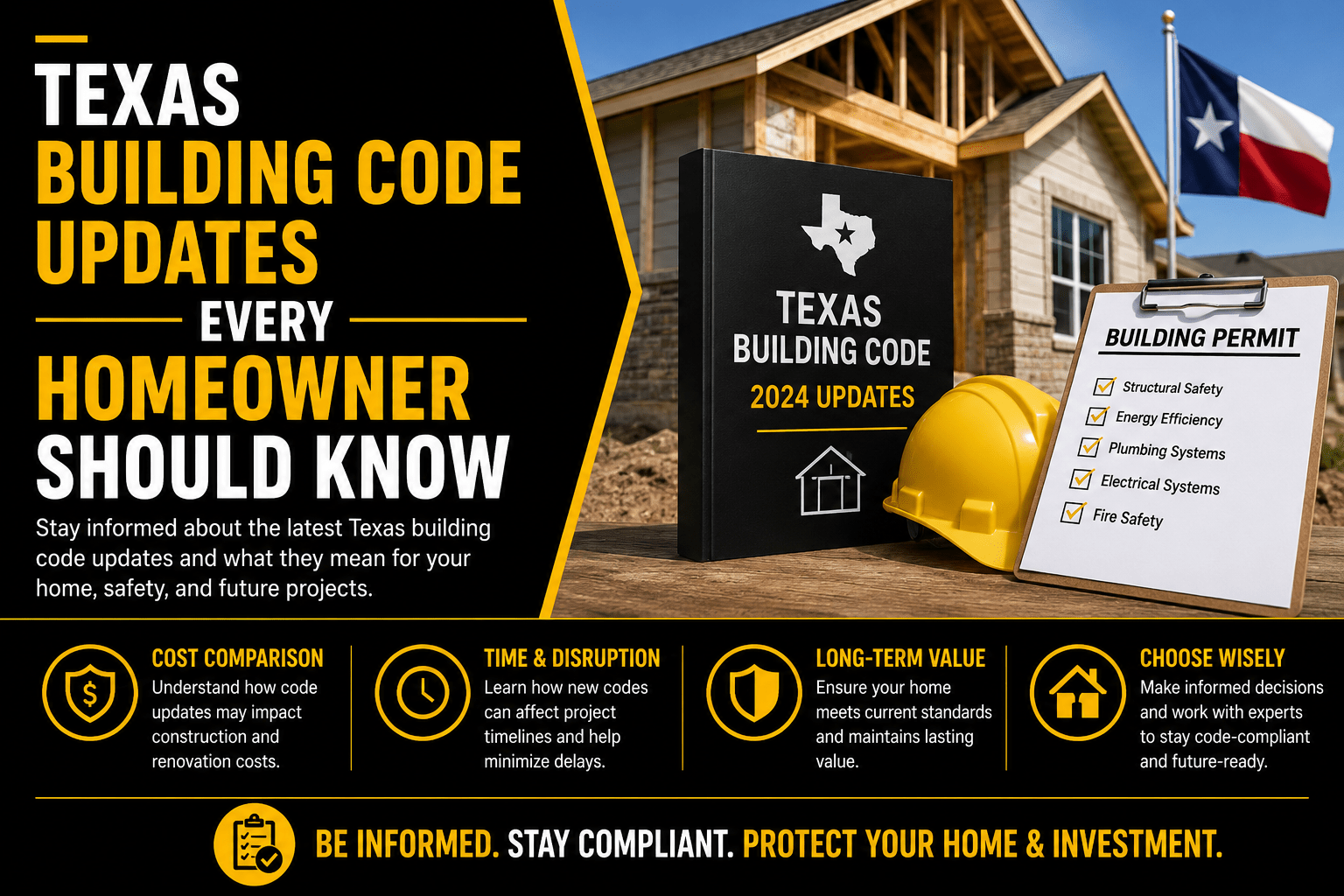
The latest texas building code updates for homeowners are affecting everything from remodeling projects and room additions to roofing, electrical upgrades, energy efficiency improvements, and new home construction. Many homeowners assume that building requirements remain unchanged for years, but building regulations evolve regularly to improve safety, structural integrity, energy conservation, and long-term property performance.
Whether you are planning a kitchen renovation, bathroom remodel, home addition, patio installation, foundation repair, or complete home renovation, understanding current texas building codes is essential. Failure to comply can result in failed inspections, permit delays, costly corrections, insurance complications, and reduced property value.
What Is Driving the Latest Texas Building Code Updates?
Several factors influence updates to the texas residential building code and local construction requirements throughout the state:
- Enhanced structural safety standards
- Updated energy conservation requirements
- Changes to the National Electrical Code
- Improved fire safety regulations
- Environmental sustainability initiatives
- Climate-specific building performance standards
- Local amendments adopted by cities and counties
- Advancements in construction materials and methods
Most Texas jurisdictions base their regulations on versions of the International Residential Code (IRC), International Building Code (IBC), and energy standards while adopting city-specific modifications. Because of these local amendments, requirements can vary significantly between municipalities.
Homeowners in areas following plano tx building codes, Dallas regulations, Frisco standards, or neighboring jurisdictions may encounter different permit requirements despite being located within the same metropolitan region.
Texas Residential Building Code Changes Homeowners Should Know
1. Stricter Energy Efficiency Requirements
One of the biggest updates involves energy conservation standards. New requirements emphasize:
- Improved insulation performance
- Higher window efficiency ratings
- Enhanced air sealing standards
- Better HVAC system performance
- Improved duct leakage testing
- Energy-efficient lighting requirements
The updated energy code focuses on reducing utility costs and improving long-term building performance. According to the U.S. Environmental Protection Agency’s energy efficiency guidance, properly designed energy improvements can significantly reduce household energy consumption while improving indoor comfort. EPA Energy Resources
2. Electrical Code Revisions
Recent adoption of newer versions of the national electrical code affects:
- GFCI protection requirements
- AFCI circuit protection
- Electric vehicle charging infrastructure
- Outdoor electrical installations
- Kitchen and bathroom outlet placement
- Generator connections
These updates are especially important during remodeling projects involving kitchens, bathrooms, garages, and home additions.
3. Climate Zone-Based Requirements
Texas contains multiple climate zone classifications. Building performance standards vary depending on geographic location and environmental conditions.
Different building code zones may require:
- Specific insulation values
- Window performance ratings
- Roofing system standards
- Moisture protection systems
- Ventilation requirements
4. Existing Building Compliance Standards
Many homeowners mistakenly believe older homes are exempt from modern regulations. While grandfathering provisions may apply, work performed on an existing building often triggers compliance requirements.
Examples include:
- Major structural renovations
- Room additions
- Electrical upgrades
- Mechanical system replacements
- Accessibility improvements
- Energy efficiency improvements
Understanding Building Code Zones in Texas
One of the most misunderstood aspects of texas building laws is how local jurisdictions implement building regulations.
While state-level standards provide a framework, municipalities often establish:
- Local permit procedures
- Inspection schedules
- Zoning restrictions
- Floodplain requirements
- Setback regulations
- Local amendments to state-adopted codes
Before beginning construction, homeowners should verify local requirements. You can also review our guide on building permits to better understand approval processes.
DIY Approaches to Building Code Research
Homeowners often attempt to handle code compliance independently before starting projects.
Common DIY approaches include:
- Reviewing municipal websites
- Reading permit guidelines
- Studying code summaries
- Watching contractor videos
- Consulting online forums
- Downloading inspection checklists
These educational efforts can help homeowners gain basic familiarity with code requirements.
Why DIY Code Compliance Often Fails
Although researching regulations independently is helpful, code interpretation is significantly more complex than most homeowners expect.
Common reasons DIY compliance efforts fail include:
- Misinterpreting code language
- Missing local amendments
- Overlooking permit requirements
- Ignoring structural engineering standards
- Using outdated code editions
- Failing inspection requirements
- Improper material selection
The International Code Council and many university construction programs emphasize that code compliance requires understanding how multiple systems interact throughout a structure rather than simply following isolated requirements. Texas A&M Construction Science Program
Many homeowners discover code issues only after inspections occur, creating expensive project delays.
Before beginning any remodeling project, reviewing an inspection checklist can help identify potential compliance concerns early.
Are Chemical Products Relevant to Building Code Compliance?
In some situations, yes.
Certain construction products, sealants, coatings, adhesives, insulation materials, and fire-resistant treatments must meet code-approved standards.
Potential concerns include:
- Indoor air quality impacts
- VOC emissions
- Fire performance ratings
- Moisture resistance requirements
- Energy efficiency performance
Using non-compliant materials may result in failed inspections or reduced building performance.
Signs Professional Code Compliance Assistance Is Needed
- Planning a home addition
- Removing load-bearing walls
- Foundation modifications
- Major kitchen remodeling
- Electrical panel upgrades
- Roof structure changes
- Converting garages or attics
- Building accessory dwelling spaces
- Addressing code violations
- Preparing for permit inspections
If your project involves structural modifications, reviewing information about structural damage and code implications can help avoid expensive mistakes.
What Is Code 604 and Why Does It Matter?
Many homeowners searching for code 604 are typically referring to accessibility requirements found within various building standards. Depending on the specific code set being referenced, Section 604 often addresses restroom accessibility dimensions and fixture placement requirements.
However, requirements vary depending on the adopted code edition and project type. Professional review is recommended whenever accessibility regulations may apply.
Why Homeowners Choose Space Construction Inc
Space Construction Inc helps homeowners navigate changing texas building requirements while delivering high-quality remodeling and construction services.
- Extensive code compliance experience
- Permit and inspection coordination
- Residential remodeling expertise
- Structural renovation knowledge
- Energy-efficient construction solutions
- Transparent project management
- Local jurisdiction familiarity
Whether you need a home renovation, a kitchen renovation, or guidance on permit compliance, our team helps ensure projects meet applicable standards from planning through final inspection.
The International Code Council continues to emphasize the importance of proper code adoption and enforcement to protect life safety, property value, and building performance. Why Building Codes Matter
Frequently Asked Questions
What are the latest Texas building code updates for homeowners?
Recent updates focus on energy efficiency, electrical safety, insulation standards, ventilation requirements, and construction performance. Homeowners planning renovations should verify current local amendments because building code adoption varies among Texas municipalities and can affect permit approvals and inspections.
Do Plano TX building codes differ from other Texas cities?
Yes. While many cities use similar base code editions, Plano may adopt unique local amendments, inspection procedures, zoning requirements, and permit standards. Always verify current municipal requirements before beginning construction or remodeling projects within city limits.
What is the Texas residential building code based on?
The Texas residential building code generally incorporates versions of the International Residential Code, energy regulations, electrical standards, and locally adopted amendments. Specific requirements vary by jurisdiction and may change as newer code editions are adopted.
How do building code zones affect residential construction?
Building code zones often correspond to climate conditions, environmental risks, and local jurisdiction requirements. These factors influence insulation standards, energy efficiency requirements, structural design considerations, moisture protection methods, and material specifications for residential construction.
Where can I find Texas building code news today?
Current updates are typically available through local building departments, municipal websites, state regulatory agencies, code adoption notices, and professional construction organizations. Homeowners should verify information directly with their jurisdiction before making project decisions.
What does code 604 refer to in building regulations?
Code 604 commonly references accessibility-related provisions in certain code standards, particularly restroom design requirements. However, its meaning depends on the adopted code document and edition, making professional interpretation important for compliance purposes.
Do Texas building codes apply to existing homes?
Existing homes may not require full compliance with current standards unless major renovations, additions, or system upgrades are performed. Many projects trigger portions of modern code requirements, especially when permits and inspections are required.
Conclusion
Understanding current texas building code updates for homeowners is critical for avoiding costly project delays, failed inspections, compliance issues, and unexpected construction expenses. As texas building codes for residential projects continue evolving, professional guidance becomes increasingly valuable for homeowners undertaking renovations, additions, or new construction.
If you are planning a remodeling or construction project and want confidence that every phase meets applicable code requirements, contact Space Construction Inc to discuss your goals, schedule a consultation, or request a project assessment before work begins.

Space Construction is a premier Dallas construction company specializing in home remodeling, commercial construction, home additions, kitchen and bathroom renovations, custom builds, and restoration services. Our expert team is dedicated to delivering high-quality craftsmanship, timely project completion, and exceptional customer satisfaction. Whether you need a full remodel, room addition, or commercial build-out, Space Construction provides reliable, professional solutions customized to your vision. Contact us today for a free consultation and let us bring your construction project to life!
0 Comments