
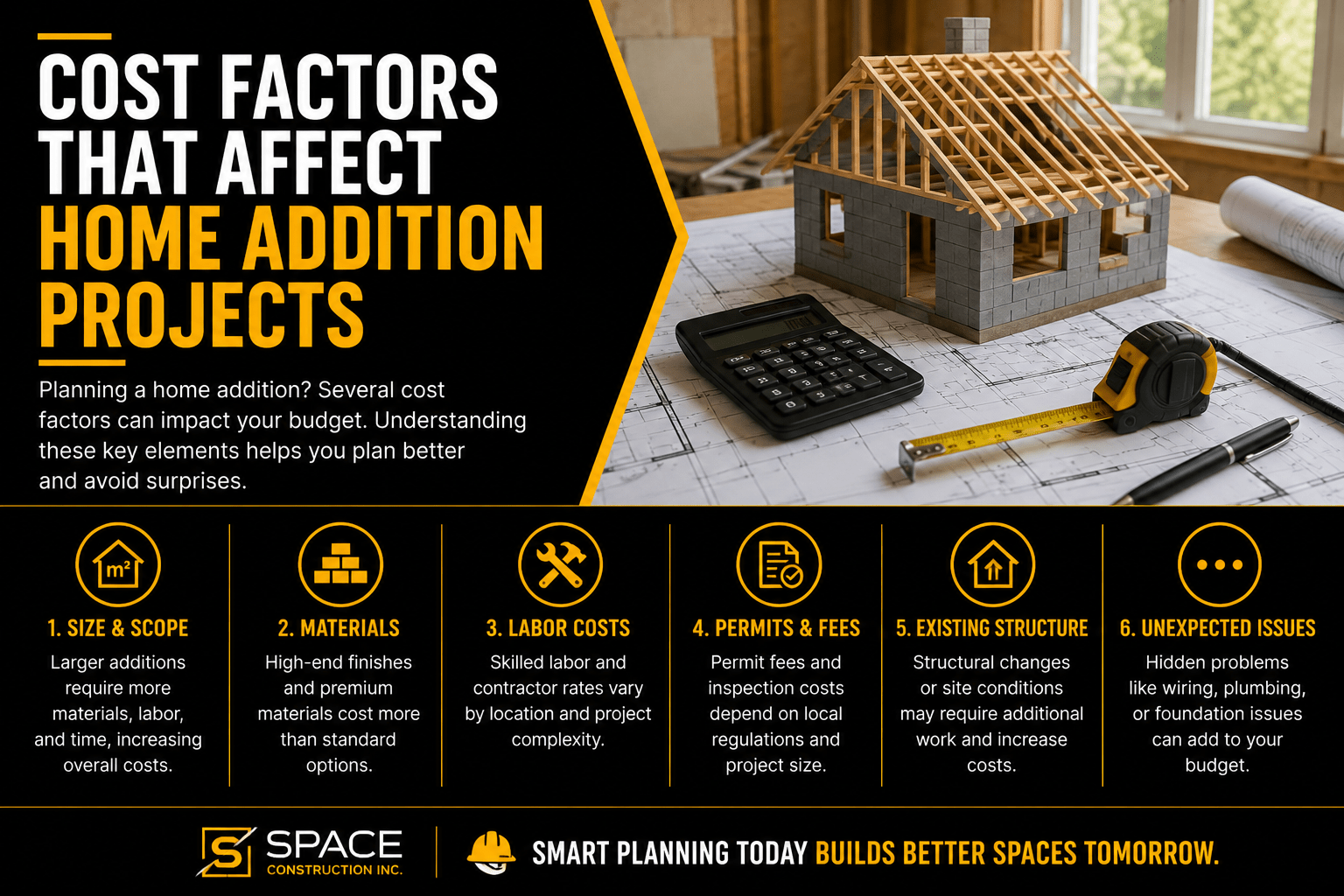
Expanding your home is one of the most rewarding investments you can make. Whether you’re planning an extra bedroom, a larger kitchen, a home office, or a second-story addition, a well-designed project can increase both your living space and your property’s value. However, before construction begins, it’s important to understand the many factors that influence the total cost of a home addition. Every project is unique, and several variables determine the final investment required.
At Space Construction Inc, we believe homeowners deserve transparency before committing to a remodeling project. Understanding what drives costs helps you plan your budget more effectively, avoid unexpected expenses, and make informed decisions throughout the construction process.
Understanding Home Addition Costs
Home additions involve much more than simply building new walls and adding a roof. Every project includes planning, design, permits, labor, materials, electrical work, plumbing, HVAC modifications, finishing details, inspections, and cleanup. Because of these moving parts, the total cost can vary significantly depending on the scope of work.
When investing in home addition services in Flower Mound, homeowners are often surprised to learn that two additions with the same square footage can have very different price tags. The difference usually comes down to design complexity, material selections, structural requirements, and the level of customization needed to blend the new space seamlessly with the existing home.
Size of the Addition
One of the biggest cost factors is the overall size of the addition. Larger spaces naturally require more building materials, additional labor hours, longer construction schedules, and more finishing work. Adding a small guest room may require far fewer resources than building a complete family room with custom finishes. Working with professional Home Addition services in Flower Mound TX ensures your project is accurately planned based on your space requirements and long-term goals. While the cost per square foot may decrease slightly on larger projects due to economies of scale, the overall investment increases as square footage grows. Planning only the space your family truly needs helps keep the project within budget while maximizing functionality.
Type of Home Addition
The purpose of your addition plays a major role in determining construction costs.
A simple bedroom or living room addition generally costs less because it requires basic framing, insulation, drywall, flooring, and electrical work. In contrast, kitchens, bathrooms, and laundry rooms require plumbing systems, specialized fixtures, cabinetry, ventilation, waterproofing, and additional electrical installations.
Second-story additions often cost more than ground-level expansions because they require reinforcing the home’s existing structure and carefully integrating new construction with the original building.
Choosing the right type of addition depends on both your family’s needs and your available budget.
Foundation Requirements
Every home addition begins with a solid foundation. The type of foundation required depends on your existing home, local building codes, and soil conditions.
If excavation is needed, additional costs may arise from grading, removing existing landscaping, dealing with rocky soil, or improving drainage around the property.
Homes built on concrete slabs require different foundation methods than homes with crawl spaces or basements. Matching the new foundation to the existing structure is essential for long-term stability.
Foundation work is one area where cutting corners is never recommended because it supports the entire addition for decades to come.
Structural Modifications
Many additions require changes to the existing home’s structure. Removing load-bearing walls, extending rooflines, relocating support beams, or reinforcing framing all increase construction costs.
Structural engineers may also be required to evaluate the home’s existing framework before construction begins.
While these modifications add to the budget, they ensure the new addition is safe, durable, and fully compliant with local building regulations.
Material Selection
Material choices have one of the biggest impacts on your overall budget.
Standard materials provide excellent durability while keeping costs manageable. Premium materials, on the other hand, offer enhanced appearance and longevity but increase the total investment.
Flooring options, roofing materials, windows, doors, insulation, countertops, siding, trim, cabinetry, and lighting fixtures all influence the final cost.
At spaceconstructioninc, we help homeowners compare material options so they can balance quality, appearance, and affordability without compromising the finished result.
Roofing Integration
A home addition must seamlessly connect with your existing roof.
Simple roof extensions are generally less expensive than projects requiring complex roof redesigns, multiple rooflines, valleys, or steep slopes.
Matching roofing materials and maintaining proper drainage are essential for preventing leaks and preserving your home’s appearance.
Professional roof integration ensures the addition looks like it was part of the original home rather than an afterthought.
Electrical System Upgrades
Every modern addition requires electrical work.
New lighting, outlets, switches, smoke detectors, ceiling fans, internet wiring, and dedicated circuits all contribute to installation costs.
In some cases, the home’s electrical panel may need upgrading to support the additional electrical demand.
Although electrical work represents only one portion of the project, it plays a critical role in safety, convenience, and future functionality.
Plumbing Costs
If your addition includes a bathroom, kitchen, wet bar, or laundry room, plumbing becomes a significant cost factor.
Installing water supply lines, drainage systems, vent pipes, fixtures, and water heaters requires skilled professionals and careful planning.
The farther the addition is located from existing plumbing lines, the higher installation costs may become.
Proper plumbing design also helps reduce maintenance issues in the future.
HVAC Expansion
Heating and cooling systems must be able to serve the additional living space.
Sometimes the existing HVAC system has enough capacity to support the expansion. In other situations, larger equipment, additional ductwork, zoning systems, or even separate HVAC units may be necessary.
Proper climate control improves comfort while maintaining energy efficiency throughout the home.
Windows and Doors
Natural light significantly improves the comfort and appearance of any addition.
The number, size, style, and energy efficiency of windows influence the project budget.
Custom windows, oversized glass panels, sliding doors, and decorative entry systems generally cost more than standard options.
High-performance windows may require a larger initial investment but often reduce heating and cooling costs over time.
Interior Finishes
After the structure is complete, interior finishing transforms the addition into a comfortable living space.
Drywall installation, painting, flooring, trim work, cabinetry, countertops, lighting fixtures, hardware, and decorative finishes all contribute to the final project cost.
Luxury finishes naturally increase expenses, while simpler selections help maintain a more affordable budget.
Many homeowners prioritize upgrades in highly visible areas while selecting cost-effective finishes elsewhere.
Exterior Finishes
The new addition should blend seamlessly with the original home’s appearance.
Matching brick, siding, stucco, stone veneer, paint colors, gutters, soffits, and trim often requires careful planning.
Older homes sometimes require custom materials that can increase costs.
A cohesive exterior not only improves curb appeal but also enhances resale value.
Permits and Inspections
Nearly every home addition requires permits and multiple inspections throughout construction.
Permit fees vary depending on your municipality, project size, and local building regulations.
Inspections ensure the work meets safety standards for structural framing, electrical systems, plumbing, HVAC installations, insulation, and final occupancy.
Working with experienced contractors simplifies this process and helps avoid costly delays.
Labor Costs
Labor represents one of the largest portions of any home addition budget.
Carpenters, electricians, plumbers, roofers, painters, flooring specialists, HVAC technicians, drywall installers, and finish carpenters all contribute to the project.
The complexity of the design, project timeline, and local labor market influence overall labor expenses.
Hiring skilled professionals may cost more initially, but quality workmanship often reduces future repair and maintenance costs.
Design Complexity
Simple rectangular additions typically cost less than projects with vaulted ceilings, custom staircases, multiple rooflines, curved walls, or expansive glass installations.
Architectural details require additional planning, engineering, specialized labor, and construction time.
While custom features increase costs, they also create a more personalized home that reflects your family’s lifestyle.
Existing Home Conditions
The condition of your current home can also affect project costs.
Older homes may require electrical upgrades, plumbing replacements, structural reinforcement, asbestos removal, or code compliance improvements before the addition can begin.
Unexpected discoveries during demolition occasionally increase expenses, making contingency planning an important part of budgeting.
Site Accessibility
Construction crews need adequate access to the work area.
Limited backyard access, steep slopes, narrow lots, mature trees, fences, retaining walls, or neighboring structures can make construction more difficult.
Equipment limitations may require additional labor or specialized machinery, increasing overall project costs.
Proper planning minimizes these challenges before work begins.
Energy Efficiency Upgrades
Many homeowners use additions as an opportunity to improve overall energy efficiency.
High-quality insulation, energy-efficient windows, advanced HVAC systems, LED lighting, and smart home technology may increase initial costs but often provide long-term savings through reduced utility bills.
Energy-efficient additions also improve indoor comfort throughout the year.
Unexpected Expenses
Even with careful planning, renovation projects occasionally uncover hidden issues.
Water damage, termite activity, outdated wiring, foundation cracks, or hidden plumbing problems may only become visible once construction begins.
Setting aside a contingency budget helps homeowners handle unexpected repairs without disrupting the project.
Most professionals recommend reserving approximately 10 to 15 percent of the total budget for unforeseen expenses.
How to Keep Home Addition Costs Under Control
The best way to manage costs is through detailed planning before construction starts. Clearly defining your goals, establishing a realistic budget, selecting appropriate materials, and working with experienced contractors helps prevent unnecessary expenses later.
Obtaining accurate estimates, reviewing project specifications carefully, and avoiding frequent design changes during construction can also reduce overall costs.
Partnering with an experienced construction company ensures each phase of the project is completed efficiently while maintaining high-quality workmanship.
At spaceconstructioninc, we guide homeowners through every step of the planning and construction process, helping them maximize value while creating beautiful, functional living spaces that fit their budget and lifestyle.
Conclusion
Home additions are significant investments that provide long-term benefits when planned properly. From foundation work and structural modifications to material selections, labor, permits, and finishing details, numerous factors influence the final project cost. Understanding these variables allows homeowners to prepare realistic budgets and make confident decisions throughout the renovation process.
Whether you’re expanding your kitchen, adding a guest suite, building a second story, or creating a dedicated home office, careful planning is the key to a successful project. By working with experienced professionals like spaceconstructioninc, you can ensure your home addition is completed with quality craftsmanship, efficient project management, and lasting value for years to come.
Frequently Asked Questions
How much does a home addition typically cost?
The total cost depends on the size, design complexity, materials, location, labor rates, and the type of addition being built. Every project requires a customized estimate.
What is the most expensive part of a home addition?
Structural work, foundation construction, kitchens, bathrooms, and labor typically account for the largest portion of the budget because they involve specialized trades and materials.
Can I reduce the cost of a home addition?
Yes. Choosing a simpler design, selecting cost-effective materials, limiting major layout changes, and planning thoroughly before construction can help reduce expenses.
How long does a home addition project take?
Most home additions take several weeks to several months depending on the size, weather conditions, permit approvals, and overall project complexity.
Does a home addition increase property value?
In many cases, yes. Well-designed additions that provide functional living space can significantly improve a home’s resale value while enhancing everyday comfort for the homeowner.

Space Construction is a premier Dallas construction company specializing in home remodeling, commercial construction, home additions, kitchen and bathroom renovations, custom builds, and restoration services. Our expert team is dedicated to delivering high-quality craftsmanship, timely project completion, and exceptional customer satisfaction. Whether you need a full remodel, room addition, or commercial build-out, Space Construction provides reliable, professional solutions customized to your vision. Contact us today for a free consultation and let us bring your construction project to life!
0 Comments