
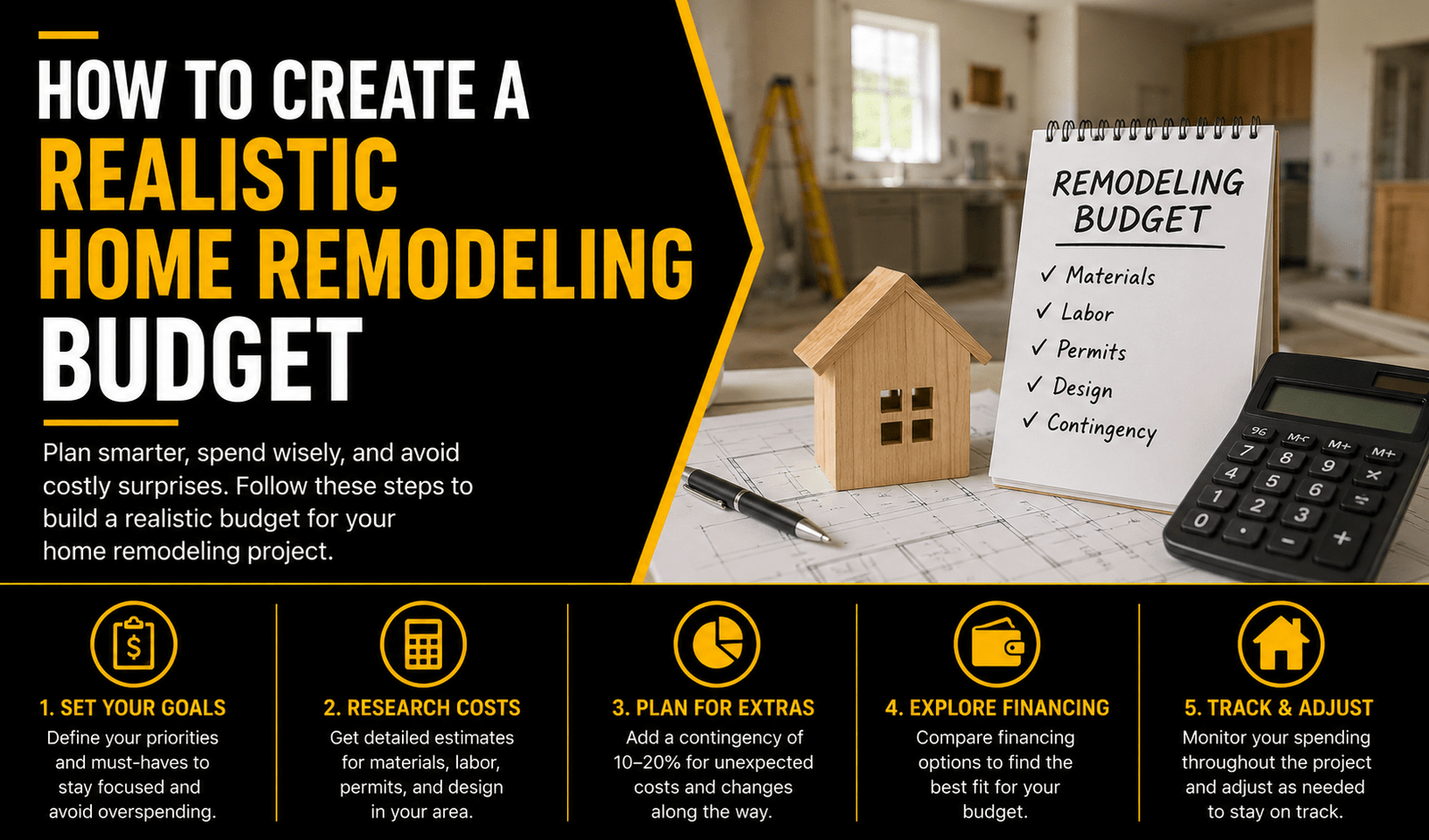
Home remodeling is one of the biggest financial decisions you will ever make as a homeowner. Whether you are dreaming of a kitchen renovation, planning a complete home renovation, or looking to add square footage with a room addition, one thing separates the projects that end beautifully from the ones that spiral into stress and regret: a realistic, well-structured budget. Without one, even the most exciting remodeling timeline can collapse into a money pit of unexpected costs, stalled work, and missed expectations.
The hard truth is that most homeowners underestimate remodeling costs by 20–40%. They start with a number in mind, skip crucial planning steps, and then discover mid-project that flooring installation costs more than expected, that building permits add thousands to the bill, or that hidden structural problems have been waiting behind the walls for years. By the time reality sets in, the budget is already blown.
This guide walks you through exactly how to create a home remodeling budget that accounts for the real costs labor, materials, permits, design, contingencies, and professional expertise so your home improvement project stays on track from day one to final walkthrough.
Why Home Remodeling Costs Spiral Out of Control
Before you can build a budget that works, you need to understand why so many renovation budgets fail. It is rarely because homeowners are careless. More often, it is because residential remodeling services involve far more complexity than most people anticipate before the project begins.
Here are the core reasons renovation costs go off the rails:
- Vague scope of work: When you say “kitchen renovation,” are you replacing cabinets, appliances, flooring, plumbing, and electrical all at once? Or just refinishing the cabinetry? The scope defines the cost, and a vague scope always leads to budget creep.
- Ignoring hidden conditions: Older homes especially carry hidden costs behind walls and under floors outdated wiring, corroded pipes, mold, water damage, or failing structural elements. Discovering these mid-project without a contingency fund is a genuine crisis. Check out our guide on structural damage during remodeling to understand what lurks beneath the surface.
- Permit fees and inspections: Building permits are not optional on most projects involving electrical, plumbing, structural, or HVAC work. Many homeowners either forget to factor them in or, worse, skip them entirely which can result in fines, forced demolition, and major problems when selling the home.
- Material cost fluctuations: Custom cabinetry, flooring materials, and specialty fixtures can shift in price significantly between the time you get your quote and the time materials are ordered.
- Change orders: Once a project begins, it is tempting to upgrade finishes or add scope. Every change order adds cost and delays and they accumulate quickly.
- Undervaluing professional labor: Skilled labor framing contractors, drywall specialists, flooring installers, tile setters is expensive for a reason. When homeowners try to cut corners on professional help, they often end up paying a remodeling contractor to fix DIY mistakes on top of completing the original work.
Research from the Harvard Joint Center for Housing Studies confirms that the US spends over $600 billion annually on home maintenance and improvement yet project cost overruns remain one of the leading sources of homeowner stress. Understanding this context before you budget is your first and most important advantage.
What a Realistic Home Remodeling Budget Actually Includes
A realistic budget is not just a number you feel comfortable with. It is a detailed, line-item breakdown of every cost category involved in the complete home renovation process. Miss one of these categories, and you will be pulling money from somewhere unexpected before the project is done.
1. Design and Planning Costs
Before a single nail goes into the wall, you need a plan. Depending on the size of your project, this might include an interior designer, an architect, or structural engineer fees. For whole home remodeling projects, design costs typically run between 5–15% of the total project budget. This is not a place to cut corners good planning prevents expensive mistakes later.
If you are considering a project like an open floor plan conversion or a major addition, design and structural engineering are not optional. They are what stands between a beautiful result and a structural failure.
2. Building Permits and Inspections
Any interior remodeling work that touches electrical systems, plumbing, HVAC, roofing, or load-bearing walls requires building permits in most jurisdictions. Permit costs vary widely from a few hundred dollars for a simple bathroom renovation to several thousand for a full addition or house remodeling project. Our comprehensive building permits guide breaks down what to expect by project type and how to navigate the permit process without delays.
Skipping permits is one of the most dangerous budget shortcuts a homeowner can take. If an inspector discovers unpermitted work whether during the project or when you sell the financial consequences are severe. Always budget for permits upfront.
3. Demolition and Preparation
Before the new can go in, the old has to come out. Demolition costs include labor for removing old fixtures, cabinetry, flooring, walls, and debris disposal. For whole home remodeling or a room addition, demolition can represent a meaningful chunk of your early budget. It is also when hidden conditions asbestos, mold, water damage, deteriorated insulation are most likely to be discovered.
4. Structural and Mechanical Work
This is the category homeowners most often underestimate. Structural work includes framing, foundation repairs, and load-bearing modifications. Mechanical work covers plumbing, electrical panel upgrades, HVAC systems, and ventilation. These are not glamorous line items, but they are essential and they are expensive. For older homes, it is common to discover that the electrical system needs a full upgrade the moment you start opening walls for a kitchen renovation or bathroom renovation.
5. Materials and Finishes
This is where most homeowners spend the bulk of their mental energy and it is easy to see why. Choosing flooring installation materials, tile, countertops, cabinetry, lighting, plumbing fixtures, and interior upgrades involves hundreds of decisions, each with a wide cost range. Custom cabinetry, for example, can cost three to five times more than stock options. Understanding where to invest and where to economize without sacrificing quality is something experienced home renovation services contractors help you navigate every day.
6. Labor Costs
Labor is typically the largest single line item in any home improvement project, often representing 30–50% of total project costs. Skilled trades electricians, plumbers, tile setters, painters, drywall contractors charge competitive rates because their expertise directly affects the quality, safety, and longevity of your finished project. Underestimating labor costs is one of the most common reasons DIY projects either stall out or need professional rescue.
7. The Contingency Fund (Non-Negotiable)
Every experienced home remodeling contractor will tell you the same thing: always reserve a contingency fund of 10–20% of your total project budget. This is not padding this is financial protection against the unexpected discoveries, material price increases, and scope adjustments that are a near certainty in any real home renovation. If you do not need it, great. If you do, it will save your project.
Realistic Cost Ranges by Project Type for 2025–2026
One of the hardest parts of budgeting for residential remodeling services is finding accurate cost benchmarks. Online estimates are often wildly off because they do not account for your local market, the condition of your existing home, or the quality of finishes you are targeting. That said, here are realistic cost ranges based on current market conditions in the Dallas–Fort Worth area and beyond.
Kitchen Renovation
- Minor kitchen update (new hardware, paint, fixtures): $10,000–$25,000
- Mid-range kitchen renovation (new cabinets, countertops, appliances, flooring): $30,000–$75,000
- High-end kitchen renovation (custom cabinetry, premium appliances, layout changes): $75,000–$150,000+
The kitchen consistently ranks as the most renovated room in American homes, and for good reason a well-executed kitchen renovation can return 60–80% of its cost in added home value while dramatically improving how you live in your space every single day.
Bathroom Renovation
- Basic bathroom update (vanity, toilet, fixtures): $8,000–$20,000
- Mid-range bathroom renovation (tile, vanity, shower, plumbing): $20,000–$50,000
- Luxury bathroom renovation (custom tile, heated floors, full gut): $50,000–$100,000+
Room Additions
- Bump-out addition (100–300 sq ft): $20,000–$60,000
- Full room addition (400–600 sq ft): $60,000–$125,000
- Second-story addition: $150,000–$300,000+
Open Floor Plan Conversion
- Removing non-load-bearing walls: $500–$5,000 per wall
- Removing load-bearing walls (requires structural engineering and beam installation): $10,000–$30,000+
Whole Home Remodeling / Complete Home Renovation
- Cosmetic whole-home refresh: $50,000–$100,000
- Mid-level complete renovation: $100,000–$250,000
- Full gut renovation: $250,000–$500,000+
For larger projects, understanding your financing options early is critical. Learn about remodeling financing options so you know exactly how much project you can realistically fund before you begin planning.
The DIY Approach: When It Makes Sense and When It Does Not
There is a certain appeal to managing your own home improvement project. You feel in control, you believe you are saving money, and for certain small-scale tasks, you absolutely can. Painting walls, installing simple light fixtures, replacing cabinet hardware, or laying peel-and-stick tile in a laundry room are examples where a reasonably handy homeowner can get good results without professional help.
But the moment a project touches plumbing, electrical systems, structural elements, load-bearing walls, roofing, or anything that requires building permits, the equation changes dramatically.
DIY Tasks That Are Generally Manageable
- Painting interior rooms
- Installing new light fixtures (with power off and basic electrical knowledge)
- Replacing cabinet hardware, faucets, and minor fixtures
- Basic landscaping and outdoor projects
- Assembling prefabricated furniture or shelving
DIY Tasks That Consistently Fail Without Professional Expertise
- Tile installation (improper substrate preparation leads to cracking and grout failure within months)
- Plumbing modifications (unpermitted work, improper slope, connection failures)
- Electrical panel work and circuit additions (serious fire and safety hazards)
- Drywall on a professional scale (visible seams, improper finishing)
- Flooring installation on uneven subfloors
- Any structural modifications or wall removals
- Roofing and exterior waterproofing
Why DIY Home Remodeling Fails And What It Actually Costs You
The National Association of Home Builders (NAHB) estimates that more than 30% of all work professional remodelers perform comes directly from failed DIY projects. That is not a small number. It represents hundreds of thousands of homeowners every year who started with confidence, hit a wall they could not overcome, and ended up paying a professional contractor twice once to fix the DIY work and again to complete the project correctly.
Here is what goes wrong most often and what it costs:
1. Hidden Structural Problems Go Undetected
A homeowner removing a wall to create an open floor plan often has no way of knowing whether that wall is load-bearing. Removing a load-bearing wall without the right structural support is not just expensive to fix it is genuinely dangerous. A licensed home remodeling contractor knows how to read a home’s framing, consult plans, and bring in the engineering expertise needed when structural changes are on the table.
2. Permit Violations Create Liability
When homeowners skip building permits to save money, they are creating a time bomb. Unpermitted work is discovered during home inspections at sale, during insurance claims, or during future renovation projects. The resulting fines, mandatory demolition, and remediation costs routinely exceed the cost of obtaining the permit in the first place by a significant margin.
3. Material Waste and Wrong Estimates
Experienced professionals know how to calculate material quantities accurately, account for waste, and order the right products for the right applications. DIY projects commonly involve ordering too little tile (leaving a half-finished floor waiting weeks for a backordered match), or too much lumber, or the wrong grade of flooring for a high-moisture environment.
4. Quality of Finish Suffers Dramatically
Interior remodeling quality shows. Grout lines that are not perfectly consistent, drywall seams that ghost through paint, tile that is not perfectly level these are the visible fingerprints of unprofessional work. They affect how your home looks, how buyers perceive it, and how much it is worth.
5. The Project Takes Two to Three Times Longer
Professional crews work with coordinated teams, established material supply chains, and decades of process experience. A bathroom renovation a professional crew completes in two to three weeks can take a homeowner four to six months of weekends leaving the family without a functional bathroom and the project continuously exposed to risk of additional damage. According to the U.S. Environmental Protection Agency (EPA), prolonged renovation work that is not properly contained and ventilated can expose your family to dust, VOCs, and other indoor air quality hazards that a professional contractor actively manages and minimizes.
Signs You Need a Professional Home Remodeling Contractor
Many homeowners wait too long to bring in professional help. By the time they realize the project is beyond them, they have already spent money on materials, potentially created code violations, and lost weeks of time. Here are the clear signals that you need a professional home remodeling company from the start:
- Your project requires a building permit. If the work involves structural changes, plumbing, electrical, roofing, HVAC, or an addition, you need permits and obtaining and managing permits is part of what a licensed contractor does for you.
- You are touching load-bearing walls or the foundation. Any work that affects the structural integrity of your home requires engineering expertise that goes far beyond DIY capability.
- The project involves multiple trades. A kitchen renovation that involves plumbing, electrical, cabinetry, flooring, and drywall requires coordination among multiple skilled trades. Professional house remodeling contractors manage that coordination for you keeping your project on schedule.
- You have discovered water damage, mold, or pest damage. These conditions require proper remediation before any remodeling work can proceed safely. Covering up water damage without treating the source is a guarantee of future, worse problems.
- Your home was built before 1978. Older homes may contain lead-based paint and asbestos. Disturbing these materials without proper handling creates serious health risks. The EPA strongly recommends hiring lead-safe certified renovators for homes built before 1978.
- You are planning a complete home renovation or whole home remodeling project. Large-scale projects with a complex remodeling timeline, multiple phases, and significant financial investment demand professional project management. The stakes are simply too high to DIY.
- You want your investment protected. A professional residential remodeling contractor carries the insurance, warranties, and licensing that protect you if something goes wrong.
How to Build Your Home Remodeling Budget Step by Step
Now that you understand what a budget needs to include and where the risks live, here is the practical process for actually building one that holds up through your project.
Step 1: Define Your Project Scope in Writing
Write down exactly what you want to accomplish in specific, measurable terms. Not “renovate the kitchen” but “replace all cabinetry, install new countertops, add a kitchen island, replace flooring, upgrade lighting, and update plumbing fixtures.” The more specific your written scope, the more accurate your estimates will be and the less opportunity there is for scope creep once the project begins.
Step 2: Get Multiple Professional Estimates
Do not rely on online cost calculators alone. Get at least three written estimates from licensed, insured home remodeling contractors. Compare line items not just totals. A low total bid that excludes permits, debris removal, or a contingency line is not actually a low bid. Our detailed guide on calculating your building material estimate will help you understand what a complete, honest estimate should contain.
Step 3: Conduct a Pre-Renovation Inspection
Before finalizing your budget, schedule a thorough pre-renovation inspection. This process identifies hidden problems before they become budget emergencies mid-project. Our detailed inspection checklist before remodeling will help you and your contractor understand exactly what you are working with before the first dollar is committed.
Step 4: Prioritize Your Project List
If your complete wish list exceeds your available budget which is extremely common prioritize ruthlessly. Start with work that affects safety, structural integrity, or systems (electrical, plumbing, roofing). Then address high-ROI improvements like kitchen and bathroom renovations. Interior upgrades like paint, fixtures, and flooring installation can often be phased across multiple projects over time.
Step 5: Build in Your Contingency
Add 10–15% to the total of all your line items as a contingency fund. For older homes, increase this to 20%. Do not treat this as money you plan to spend treat it as money you must have available. Projects that exhaust a contingency fund and still face unexpected costs are projects that stall, create lender headaches, and stress relationships.
Step 6: Explore Financing Early
If you are financing any portion of your home improvement project, explore your options before you start spending. Home equity loans, HELOCs, personal loans, and contractor financing programs all have different terms and implications. Understanding your total borrowing capacity upfront prevents the worst-case scenario: running out of financing with a half-completed project.
Step 7: Create a Payment Schedule Tied to Milestones
Never pay the full project cost upfront. A professional home remodeling company will provide a payment schedule tied to project milestones deposit, framing complete, rough-in inspections passed, finishes installed, final walkthrough. This structure protects both parties and ensures the contractor stays motivated and accountable throughout the remodeling timeline.
The Most Common Home Remodeling Budget Mistakes and How to Avoid Them
- Setting a budget before getting real estimates. Decide on a number before seeing actual contractor bids and you will inevitably either cut critical scope or face sticker shock. Get estimates first, then budget to match reality.
- Choosing contractors based on the lowest bid. The lowest bid usually wins because it excludes something proper permitting, quality materials, adequate labor, or a realistic contingency. A low bid that turns into change orders and delays always costs more than a thorough bid from the start.
- Underestimating how much finishes cost. The distance between builder-grade finishes and custom finishes is enormous in cost. If your scope calls for “high-end,” build that into your material budget from the beginning not after you fall in love with a tile that costs $35 per square foot.
- Not accounting for living disruption costs. A whole home remodeling project may require you to live elsewhere, eat out more, and store belongings offsite. These costs are real and should be in your budget.
- Forgetting about post-renovation costs. New flooring needs rugs. A new open floor plan needs furniture rearranged. A new kitchen may need new dishes to match. These are not remodeling costs per se, but they are expenses that follow remodeling projects consistently.
What a Professional Home Remodeling Company Delivers That You Cannot DIY
When you hire an experienced home remodeling contractor, you are not just paying for labor. You are buying access to a complete system design collaboration, permit management, material sourcing relationships, trade coordination, quality oversight, and project management that keeps your home transformation moving on schedule and on budget.
- Licensed and insured protection: A licensed contractor carries liability insurance and workers’ compensation. If something goes wrong on your property, you are protected. Without this, you are personally liable.
- Building permit management: Your contractor knows what permits are required, obtains them, and schedules inspections so your project is code-compliant and legally documented.
- Access to trade professionals: Established contractors have relationships with skilled electricians, plumbers, tile setters, and specialty trades that are often booked months in advance independently. Your contractor brings them to your project as a coordinated team.
- Material cost advantages: Professional contractors buy materials at trade pricing, often passing meaningful savings on to clients and guaranteeing material quality and consistency.
- Warranty and accountability: Reputable home renovation services contractors stand behind their work. Defects discovered after project completion are their responsibility to remedy not yours alone to manage.
- Project timeline management: An experienced home remodeling company keeps subcontractors coordinated, materials arriving on schedule, and inspections arranged keeping your remodeling timeline realistic and your family’s disruption minimized.
Why Space Construction Inc Is the Home Remodeling Contractor Homeowners Trust
At Space Construction Inc, we have spent years earning the trust of homeowners across the Dallas–Fort Worth area by doing one thing consistently: delivering complete home renovation and residential remodeling services that arrive on time, stay within budget, and finish with the quality that makes homeowners proud to show their space to anyone.
We are not a national franchise with a call center. We are a hands-on, locally rooted home remodeling company where your project is managed by experienced professionals who understand the construction standards, permit requirements, and material realities of your specific market. Every project we take on whether it is a kitchen renovation in Frisco, a bathroom renovation in Plano, or a whole home remodeling project in Dallas receives our full commitment to budget transparency, quality craftsmanship, and clear communication from estimate to completion.
What Sets Space Construction Inc Apart
- Transparent, detailed estimates with no surprise add-ons after work begins
- Licensed, insured, and permit-compliant on every project, every time
- Full-service residential remodeling from kitchen renovations and bathroom renovations to room additions, open floor plan conversions, and complete home renovations
- Pre-renovation inspections that identify hidden conditions before they become budget emergencies
- Skilled trade coordination framing, flooring, drywall, painting, plumbing, electrical, and more, all managed under one roof
- Serving homeowners across Dallas, Frisco, Plano, McKinney, Allen, Flower Mound, Denton, and 20+ surrounding communities
- A proven portfolio of completed home transformations you can review before you decide
We also serve homeowners across McKinney, Allen, Flower Mound, Denton, Lewisville, and throughout the greater North Texas region. Wherever you are in the DFW area, we bring the same level of expertise and accountability to your home improvement project.
Frequently Asked Questions About Home Remodeling Budgets
How much should I budget for a home remodeling project?
Budget ranges vary significantly by project type. A kitchen renovation typically runs $30,000–$150,000+, while a bathroom renovation ranges from $15,000–$80,000+. Whole home remodeling can range from $100,000 to $500,000 or more. Always add a 10–20% contingency buffer for unexpected conditions discovered mid-project.
Why is my remodeling estimate so much higher than I expected?
Most homeowners underestimate remodeling costs by 20–40%. Accurate estimates include labor, materials, permits, disposal, design fees, and contingency not just materials alone. Online cost calculators rarely reflect real local market pricing, material quality choices, or the complexity of your specific home’s existing conditions.
Do I need a permit for my home remodeling project?
Most projects involving structural changes, electrical, plumbing, HVAC, roofing, or room additions require building permits. Skipping permits creates serious liability risks, potential fines, and major complications when selling your home. A licensed home remodeling contractor manages permit applications and inspections on your behalf.
How long does a typical home remodeling project take?
A bathroom renovation typically takes two to four weeks with a professional crew. A kitchen renovation runs three to eight weeks depending on scope. Whole home remodeling or complete home renovations can take three to twelve months or more. Your remodeling timeline depends on project scope, permit approvals, material lead times, and crew availability.
What is a contingency fund and how much should I set aside?
A contingency fund is a financial reserve typically 10–20% of your total project budget set aside for unexpected costs that emerge once work begins. Hidden water damage, outdated wiring, structural surprises, and material price changes are common triggers. For older homes, budget 20% or more, as surprises are more likely behind older walls.
Which home remodeling projects deliver the best return on investment?
Kitchen renovations, bathroom renovations, and flooring installation consistently deliver strong ROI typically returning 60–80% of project cost in added home value. Room additions and open floor plan conversions add livability and value simultaneously. Whole home remodeling that modernizes outdated systems delivers both functional and market value improvements.
How do I choose the right home remodeling contractor?
Look for a licensed, insured contractor with verifiable references, a detailed written estimate, and a clear project timeline. Request proof of licensing and insurance before signing any contract. Review their completed project portfolio and confirm they manage permit applications directly. Avoid contractors who ask for full payment upfront or cannot provide written contracts.
Can I finance a home remodeling project?
Yes. Common financing options include home equity loans, HELOCs, personal loans, and contractor-partnered financing programs. Explore your options and get pre-qualified before starting work. Knowing your financing ceiling upfront allows you to scope your project realistically and prevents running out of funds mid-renovation, which is one of the most damaging situations a homeowner can face.
Start Your Home Remodeling Project the Right Way
A successful home remodeling project does not happen by accident. It is the result of careful planning, realistic budgeting, the right professional team, and a commitment to doing the work correctly from the foundation up. Whether you are planning a single-room renovation or a complete home renovation, the decisions you make during the planning and budgeting phase will determine the outcome of everything that follows.
The difference between a dream project and a budget disaster almost always comes down to one choice: bringing in experienced home renovation services from the very beginning versus trying to manage it alone or on the cheap. Skipping permits, underestimating labor, ignoring hidden conditions, or choosing contractors by price alone are the moves that turn exciting house remodeling projects into expensive regrets.
At Space Construction Inc, we make the process straightforward, transparent, and manageable. We start with a thorough assessment of your home, give you a detailed estimate that reflects real costs, manage all permitting, coordinate all trades, and deliver finished results that hold up in quality, code compliance, and long-term value.
If you are ready to stop planning and start building or if you simply want to talk through your project and get a professional read on realistic costs we are here to help. Reach out to our team today for a free project estimate, or contact us directly to schedule a consultation. Our team serves homeowners across Dallas, Plano, Frisco, McKinney, Allen, Flower Mound, Denton, Lewisville, and the entire DFW area and we would be glad to bring the same standard of excellence to your home.

Space Construction is a premier Dallas construction company specializing in home remodeling, commercial construction, home additions, kitchen and bathroom renovations, custom builds, and restoration services. Our expert team is dedicated to delivering high-quality craftsmanship, timely project completion, and exceptional customer satisfaction. Whether you need a full remodel, room addition, or commercial build-out, Space Construction provides reliable, professional solutions customized to your vision. Contact us today for a free consultation and let us bring your construction project to life!
0 Comments