
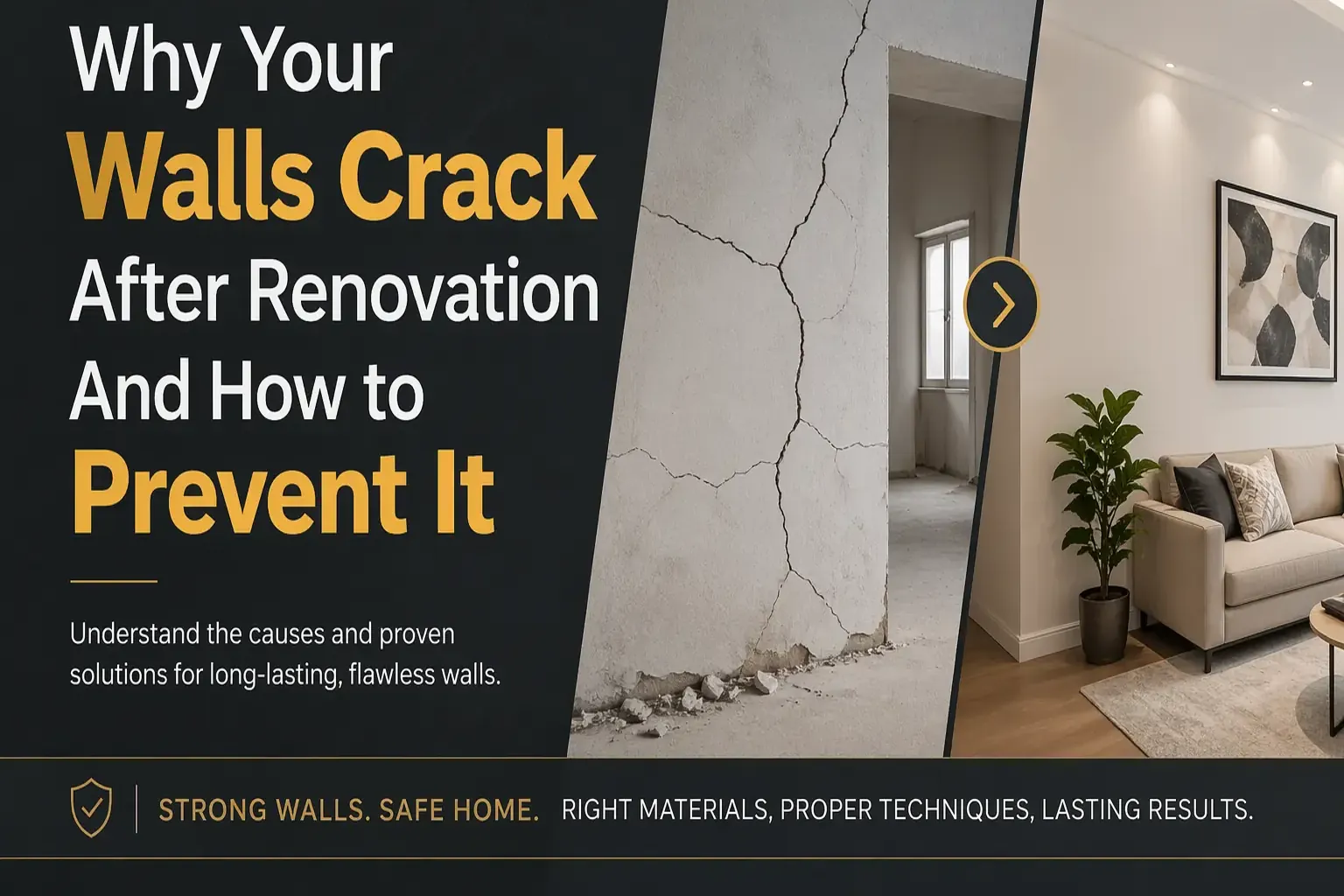
If you’re asking why cracks appear after home renovation, you’re not alone. Many homeowners feel alarmed when they notice cracks in a wall shortly after investing in remodeling. What looks like a minor issue today can quickly escalate into significant structural damage if ignored.
At Space Construction Inc, we regularly inspect homes where newly renovated walls begin to crack, peel, or shift. The reality is simple: not all cracks are cosmetic. Some are early warning signs of deeper problems involving foundation movement, building materials, or poor workmanship.
What Causes Cracks in Walls After Renovation?
Understanding the causes of cracks in walls is the first step to solving the problem correctly. Renovation changes the structural balance of a home, and if not handled properly, materials begin to expand and contract unevenly.
1. Foundation Movement and Settling
One of the most common reasons cracked walls appear is the settling of the foundation. During remodeling, added weight or structural changes can cause the foundation to settle unevenly. This often results in vertical cracks, horizontal cracks, or a crack runs diagonally across plaster walls.
2. Poor Quality Building Materials
Using low-grade building materials or incorrect plaster mixtures can lead to cracks in plaster. As materials dry and shrink, hairline cracks or cracks on wall plaster become visible within weeks.
3. Moisture and Water Damage
Hidden leaks or humidity can weaken walls from the inside. If you’ve skipped a proper inspection checklist, moisture-related crack inside walls may already be developing.
4. Structural Changes During Renovation
Removing load-bearing walls or modifying framing without proper reinforcement can cause structural cracks. These are not cosmetic—they signal potential structural damage requiring immediate attention.
5. Natural Expansion and Contraction
Temperature changes cause materials to expand and contract. Without proper joints or allowances, plaster walls develop cracks over time, especially in older homes.
According to the EPA indoor air quality guide, moisture imbalance inside homes significantly contributes to material deterioration and cracking.
Types of Cracks in Walls You Should Never Ignore
- Hairline cracks: Usually cosmetic but may indicate poor finishing
- Vertical cracks: Often due to settling of the foundation
- Horizontal cracks: A major sign of foundation issues
- Diagonal cracks: Often structural, caused by uneven settling
- Wide structural cracks: Require immediate structural engineer evaluation
Understanding the type of crack helps determine whether it’s harmless or a serious structural wall cracks issue.
DIY Fixes for Cracked Walls (What Homeowners Try First)
Most homeowners attempt DIY solutions before calling professionals. Common approaches include:
- Filling cracks with putty or caulk
- Repainting cracked areas
- Applying plaster patches
- Using crack repair tapes
These methods can temporarily hide cracks in plaster walls, especially hairline cracks.
Why DIY Repairs Usually Fail
Here’s the truth: DIY solutions don’t address the root cause. They only mask symptoms.
Cracks caused by foundation movement, structural damage, or improper renovation techniques will always return. In many cases, they worsen.
Without understanding the causes of cracks in walls, homeowners often waste time and money repeating surface-level fixes.
Even worse, DIY repairs can delay professional intervention, allowing structural cracks to expand.
Research from University of Minnesota Extension highlights that untreated foundation issues can lead to severe structural failure over time.
Risks of Using Chemical Crack Fillers
Many commercial crack repair products promise quick fixes, but they come with risks:
- They may trap moisture inside walls
- They don’t adapt to ongoing expansion and contraction
- They can hide structural cracks instead of fixing them
Some chemical fillers can even weaken plaster walls over time, making future repairs more complicated.
Signs You Need Professional Help Immediately
If you notice any of the following, it’s time to stop DIY attempts and call experts:
- Cracks wider than 1/8 inch
- Horizontal cracks or stair-step cracks
- Doors and windows misaligning
- Repeated cracks after repair
- Visible foundation issues
In such cases, a structural engineer or experienced contractor is essential to diagnose and fix the problem correctly.
You can also review this structural damage guide to understand early warning signs.
Why Choose All American Plumbing
When it comes to cracked walls and structural concerns, experience matters.
At Space Construction Inc, we go beyond surface repairs. Our team evaluates the entire structure—from foundation repair needs to material integrity—to ensure long-term stability.
- Comprehensive structural inspections
- Expert foundation contractors
- High-quality building materials
- Long-lasting repair solutions
Whether you’re dealing with cracks in plaster or major structural cracks, our remodeling contractors provide solutions that protect your investment.
The National Association of Home Builders emphasizes that structural integrity should always be handled by licensed professionals—not temporary fixes.
FAQs About Cracked Walls
Why do walls crack after renovation?
Walls crack after renovation due to foundation movement, poor building materials, or structural changes. As the home settles unevenly, stress builds within plaster walls, causing visible cracks that may indicate deeper structural issues.
Are cracks in plaster walls serious?
Not all cracks in plaster walls are serious. Hairline cracks are often cosmetic, but wider or recurring cracks may signal foundation issues or structural damage that requires professional evaluation.
How can I tell if a crack is structural?
Structural cracks are typically wider, horizontal, or diagonal. They may continue growing and are often accompanied by uneven floors or sticking doors, indicating possible foundation movement or structural wall cracks.
Can cracked walls be repaired permanently?
Yes, but only if the root cause is addressed. Surface repairs alone will not fix cracks caused by settling of the foundation or structural damage. Professional assessment ensures long-term results.
Do older homes develop more cracks?
Older homes are more prone to cracks due to aging materials and foundation shifts. Over time, structures weaken, making cracks more common and sometimes more severe.
What causes cracks on wall plaster?
Cracks on wall plaster are often caused by improper application, drying shrinkage, or environmental changes. Poor-quality materials and moisture exposure can worsen the problem significantly.
Should I worry about hairline cracks?
Hairline cracks are usually minor but should still be monitored. If they expand or reappear after repairs, they may indicate deeper issues that require professional inspection.
Conclusion: Don’t Ignore Why Cracks Appear After Home Renovation
Understanding why cracks appear after home renovation is critical to protecting your home’s structure and value. What starts as a small crack inside your wall can quickly evolve into a serious structural problem.
Instead of relying on temporary DIY fixes, take a proactive approach. A professional inspection ensures that underlying issues—like foundation movement or structural damage—are identified and resolved properly.
If you’re noticing cracks in your walls after remodeling, now is the time to act. Schedule a professional assessment with Space Construction Inc and get a clear, lasting solution tailored to your home.
Contact us today to protect your investment and restore your peace of mind.

0 Comments